
After El Mencho’s Death, Mexico Faces a New Wave of Violence and Uncertainty
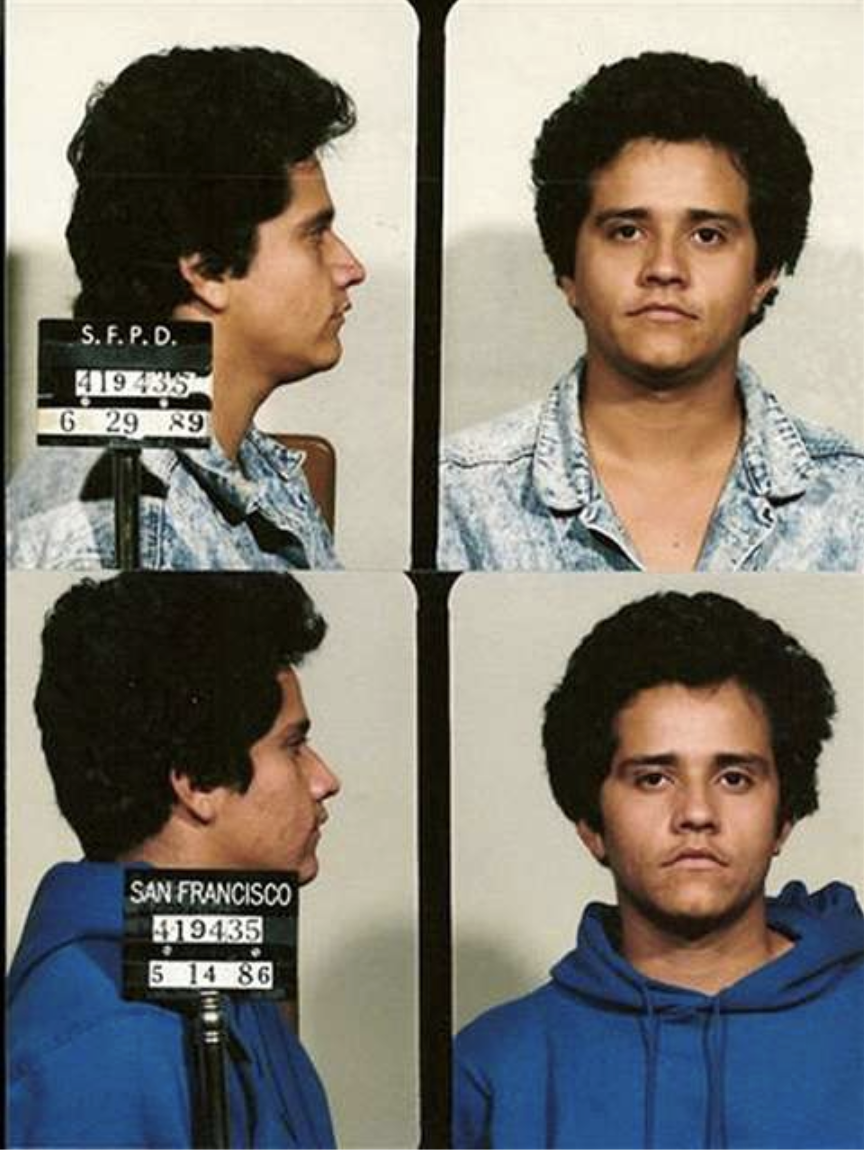
El Mencho’s 1986 and 1989 mugshots (San Francisco Police Department)
WASHINGTON, D.C. (GEORGETOWN UNIVERSITY) — Mexico is entering one of the most uncertain periods in its modern history after the killing of Nemesio Rubén Oseguera Cervantes, known as “El Mencho,” the leader of the Jalisco New Generation Cartel. His death set off a chain reaction of violence across the country, exposing the strength of cartel networks and the limits of Mexico’s security strategy. From major cities to rural towns, the aftermath has shown how deeply criminal groups are embedded in daily life — and how difficult it will be to restore stability.
The military operation that killed El Mencho took place on Feb. 22 in the mountains of Jalisco. Security forces, backed by U.S. intelligence, tracked cartel movements before launching the raid. The government called the operation a major victory. But within hours, CJNG cells across the country launched coordinated attacks. Highways were blocked, vehicles were burned, and armed groups forced residents indoors. Airports in Guadalajara, Puerto Vallarta, and Mazatlán canceled flights as smoke and gunfire spread.
The violence quickly spread beyond Jalisco. In Guerrero, civilians armed with AK‑47s, grenades, and drones fought back against La Nueva Familia Michoacana after days under siege, according to an Associated Press report published by PBS. Residents formed defense lines to protect their towns, showing how communities have been left to fend for themselves as cartel violence grows.
The scale of the crisis reflects deeper problems that experts say have been building for years. At a public event hosted at Georgetown University by the Georgetown Americas Institute, titled “Can Mexico’s Drug Cartels Be Defeated?”, researchers warned that cartels are far more complex than many political narratives suggest. Falko Ernst, who has spent years studying criminal groups in Mexico, said the idea of defeating cartels through force alone is unrealistic. “Cartels are about the tip of the iceberg, a very complex political, social, economic system,” he said. “You can suppress some of the manifestations… but you will not get rid of the phenomenon per se.”
El Mencho’s rise and influence help explain why his death has had such a dramatic impact. A profile by InSight Crime describes him as a former police officer who built CJNG into one of Mexico’s most aggressive cartels. Under his leadership, the group expanded rapidly, using military‑style tactics, corruption and strategic alliances to control key trafficking routes. The U.S. State Department had offered up to $10 million for information leading to his arrest, calling him one of the most dangerous cartel leaders in the world.
The Drug Enforcement Administration identifies CJNG as one of the two dominant cartels responsible for trafficking fentanyl and methamphetamine into the United States. The DEA notes that CJNG maintains operations in dozens of U.S. cities, showing how the group’s influence extends far beyond Mexico.
But experts say the structure of modern cartels makes them difficult to dismantle. At the Georgetown University event, Ernst said the “kingpin strategy” — targeting top leaders — has often made things worse. “You take out one name… and you’re still left with the whole problem that is 99% of the story,” he said. “It has led to the multiplication from about six big actors to about 200.”
Steven Dudley, co‑founder of InSight Crime, said CJNG’s decentralized model allows it to survive major blows. “This notion that everybody wakes up in the morning and calls their cartel boss… is just so far from what it is on the ground,” he said. Many producers of fentanyl and meth operate independently, paying taxes to whichever group controls the territory.
This fragmentation has been documented by multiple research organizations. A report by WLRN explained how Mexico’s major cartels have splintered into smaller groups that fight for control of territory and local economies. These groups often rely on extortion, intimidation, and rapid mobility, making them difficult for authorities to track.
Mexico’s long struggle with organized crime has also been shaped by institutional weaknesses. An analysis by the George W. Bush Institute noted that efforts to combat cartels have been undermined by corruption, uneven law enforcement capacity, and a lack of coordination across levels of government. Criminal groups have filled power vacuums in regions where the state is weak or absent.
The Council on Foreign Relations describes Mexico’s conflict with organized crime as a “long war” marked by cycles of militarized crackdowns and cartel adaptation. Despite years of cooperation with the United States and billions of dollars in security spending, violence has remained high.
Legal scholars have raised questions about the nature of the conflict. A recent analysis by the Lieber Institute at West Point examined whether CJNG’s coordinated attacks after El Mencho’s death meet the threshold of a non‑international armed conflict. The article noted that the scale and organization of the attacks challenge traditional assumptions about organized crime.
The debate has also reached U.S. policy circles. A simulation by the Win Without War Education Fund examined the potential consequences of a U.S. military strike on Mexican cartels. The report found that such an operation would likely trigger widespread retaliation, destabilize border regions, and fail to eliminate cartel networks. It concluded that without addressing corruption, weak institutions, and U.S. drug demand, military intervention would not reduce cartel power.
The Georgetown Journal of International Affairs warned that framing Mexico’s security crisis as a “war on cartels” can be misleading. The article argued that the war narrative oversimplifies a complex criminal ecosystem and encourages militarized responses that have historically failed.
As Mexico works to restore order, the government has deployed additional security forces across Jalisco and other states. But the events of the past week show how quickly the country can be thrown into turmoil and how difficult it will be to dismantle criminal organizations that have embedded themselves into local economies and political systems.
Residents in affected regions remain cautious. Many are waiting to see whether this moment becomes a turning point or another chapter in a conflict that has stretched on for nearly two decades.