
Deforestation in Indonesia Dramatically Rose in 2025
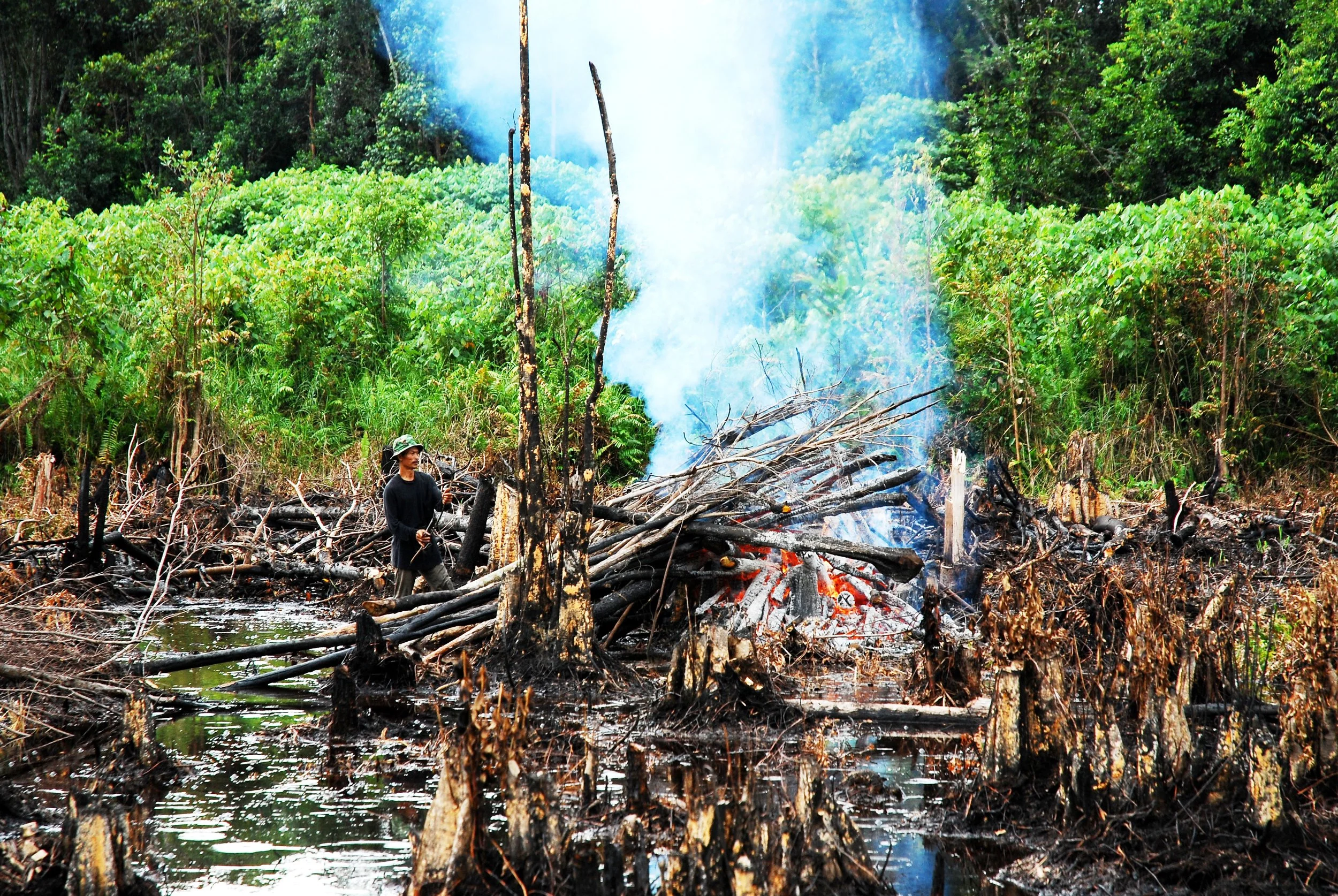
Deforestation in Indonesia spiked in 2025, driven by state self-sufficiency push and sparking environmental concerns (Rian Woo via Flickr).
Deforestation in Indonesia surged by 66 percent in 2025 as state-owned industries clear land for agriculture and mining, reversing previous declines in clearing. At least 433,751 hectares of forests were cleared, up from 261,575 in 2024, driven by new initiatives by President Prabowo Subianto for economic growth and self-sufficiency.
These clearings, first observed and reported by Indonesian think tank Auriga Nusantara based on 500,000 pieces of satellite imagery and ground measurements, surged by 348 percent on the island of Papua and 440 percent on Java. 74 percent of Indonesian localities experienced deforestation in 2025.
The Jakarta Post reports that the Forestry Ministry disputes these totals, only reporting a loss of 166,000 hectares in the first nine months of 2025. Ministry spokesman Ristianto Pribadi asserted that temporary clearings and tree farming obscured the think tank's figures.
These revelations come as the Prabowo administration seeks agricultural and energy self-sufficiency for the archipelagic nation, led by state-owned enterprises. Auriga reports that starting in December 2024, the administration allocated 20.6 million hectares of land for food, water and energy resource management. Under the banner of National Strategic Programs (PSN), these lands are designated for economic activity, namely for agricultural production of crops like rice, sugarcane, and palm oil and mining for thermal coal and nickel, as reported by Reuters. Additionally, Mongabay notes that the administration passed the Job Creation Omnibus Law, removing environmental protections like a 30 percent minimum tree cover to promote growth.
The executive director of the Papua chapter of the Indonesian Forum for the Environment, Maikel Primus Peuki, directly blamed these projects and deregulation for the rapid deforestation in Papua, saying, “The most apparent threat in Papua, especially in its southern part, is PSN, including ever-expanding rice and sugarcane plantations” and raising the alarm that “we are witnessing massive clearing of forests before our eyes.”
The Prabowo administration has lauded the PSN program, celebrating the country’s food self-sufficiency in 2025. Associating the food program with national pride, the president announced in January that “Today, you have given the nation and the state clear and tangible proof. In my view, you have marked an important milestone in Indonesia’s independence."
With the stated motivation of cracking down on mismanagement and forestry crime, Indonesia announced seizures of plantations and mines in April, transferring 30,500 hectares of oil palm plantations to Agrinas Palma Nusantara, a state-owned enterprise. As reported by Reuters, other firms received fines and threats of prosecution, indicating these crackdowns, along with the land clearings, represent part of a strong push by the government to intensify control of natural resource management.
However, this centralization and expansion of natural resource extraction portends devastating effects for the Indonesian environment. Auriga notes that three provinces with particularly higher levels of land clearing, Aceh, North Sumatra, and West Sumatra, suffered from devastating landslides, intensified by the lack of tree roots anchoring the soil. The World Wildlife Fund warns that deforestation also wipes out biodiversity, spikes carbon emissions, and increases soil erosion, among other negative impacts. Indonesia will be forced to confront these environmental effects as it balances its environmental stewardship with resource extraction and economic growth.