
Tajikistan Emerges as Global Leader in Glacier Preservation
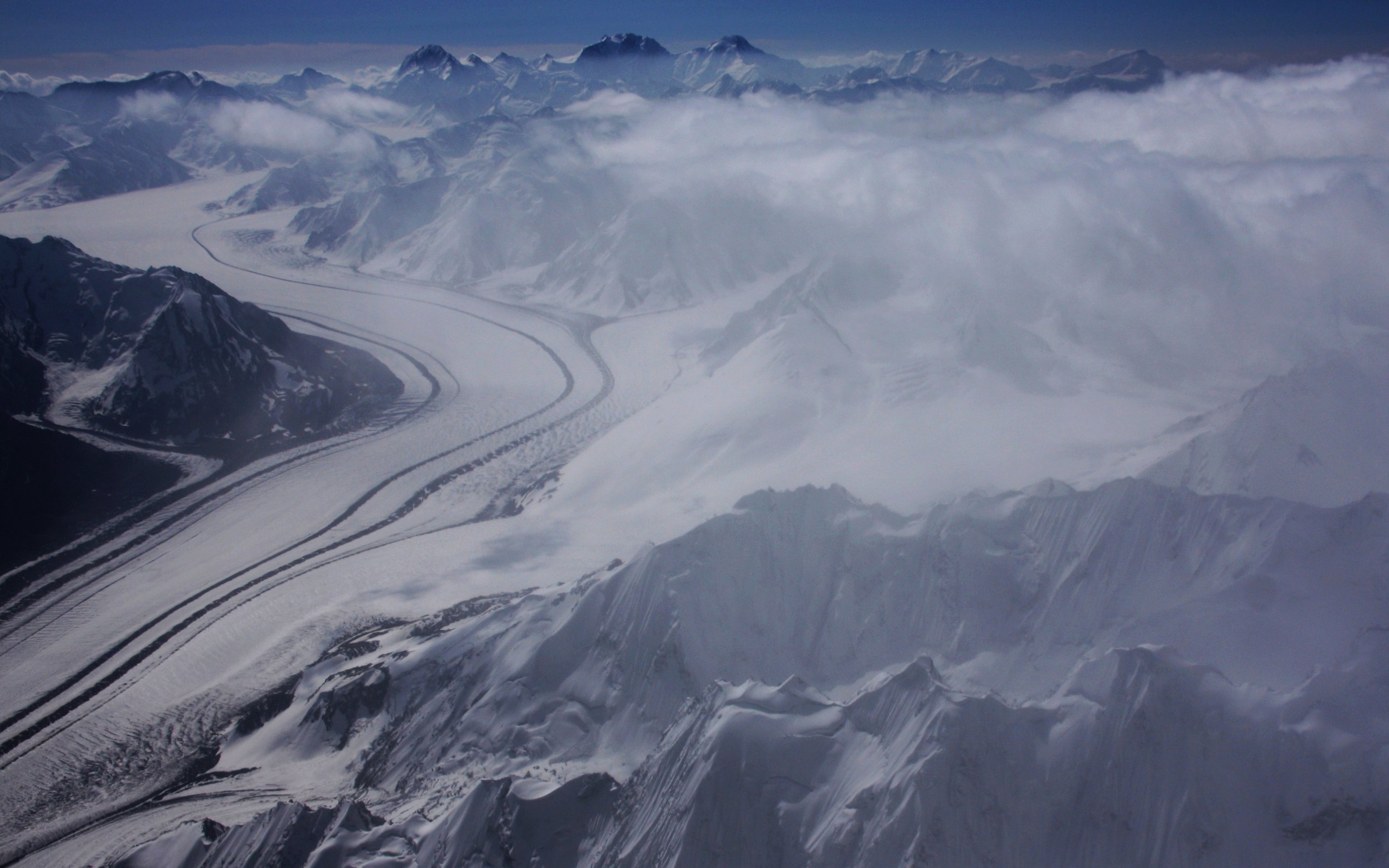
Tajikistan is home to the world’s longest continental glacier (outside the polar regions): the Fedchenko Glacier spans nearly 50 miles through the heart of the Pamir Mountains (Martin Mergili//imaggeo).
The Tajik government’s Agency of Hydrometeorology of the Committee for Environmental Protection held a conference entitled “Glaciers, Climate and Water Resources: Modern Challenges and International Cooperation” on March 12. The conference was held in recognition of World Glacier Day, which falls on March 21 and, at Tajikistan’s urging, was first named by the UN General Assembly in 2025. Government representatives from both Tajikistan and abroad, mass media representatives, and water and climate scientists all attended the conference with the shared goal of coordinating “scientific, institutional, and international efforts for the study, monitoring, and preservation of Tajikistan’s glaciers in the context of climate change”.
Nearly 2 billion people depend directly on freshwater supplied by glaciers — which store roughly 70% of the Earth’s total freshwater —for drinking, agriculture, and industry. Thus, the issue of glacier retreat and disappearance caused by climate change is enormous in scale: changes in glacier behavior can give rise to changes in the entire water cycle, affecting water supply across the world. In Central Asia, the issue is particularly pressing. Glaciers comprise a much greater proportion of the water resources in this region than in other parts of the world, while temperatures are rising at twice the global average rate.
As the home to the greatest number of glaciers among all Central Asian countries and perhaps 60% of the region’s water resources, Tajikistan has emerged as a global leader in advocating for glacier preservation. The March 12 conference was one of many steps Tajikistan’s government has taken in recent years in this role. In 2025, it hosted the first International Conference on Glaciers’ Preservation, and President Emomali Rahmon has heavily advocated for glacier protection at the UN since.
In addition, Tajikistan is one of several Central Asian countries collaborating with the International Atomic Energy Agency (IAEA) to both monitor and combat the problem. Kyrgyzstan, in particular, second only to Turkmenistan in its glacier population but facing a loss of around 16% of that glacier volume in the past five to seven decades, has also taken the lead alongside Tajikistan. Together with those two countries, Turkmenistan, Kazakhstan, and Uzbekistan are working with the IAEA on several projects to monitor glacier conditions, snow cover, and water resources. Kazakhstan and Uzbekistan (alongside 10 other countries) are engaged in a new IAEA-organized research project with the goal of improving scientific understanding of the processes underlying glacier retreat and its subsequent effects on the water supply. Tajikistan and Uzbekistan (alongside seven other countries) are working on another IAEA project aiming to “support evidence-based management of transboundary water resources”.
As these efforts progress, the problem in Tajikistan and across Central Asia continues to worsen. To date, more than 1,000 of Tajikistan’s 14,000 glaciers have completely disappeared, and the rate of that loss does not appear to be slowing yet — a fact that puts the water supply across all of Central Asia at risk. Also a concern is Tajikistan’s track record on another environmental issue, air pollution, which creates doubts about its ability to address glacier retreat. As late as 2024, Tajikistan ranked 6th globally for air pollution. Despite the government’s publication of more than one ambitious green transition plan, several of the deadlines for those plans have come and gone without being met. Some claim that the government isn’t doing enough, focusing too much on “eco-friendly rhetoric” while failing to adequately limit “polluting actions on the ground”.
Despite these claims, Tajikistan remains one of the world’s leaders in advocacy for glacier preservation, and real changes are being implemented. In 2023, 21.6% of the country’s territory consisted of protected areas — including reserves, refuges, and parks, together containing thousands of glaciers — compared to just 3.6% in 1991. Furthermore, as projects like the IAEA’s allow researchers a better understanding of glacier behavior and the recharge capacities of water resource systems, there is hope for better-informed sustainable water management strategies for mountainous regions, as well as better water resource planning for downstream regions.