
2025 Report is Encouraging for Persian Leopard Conservation Efforts
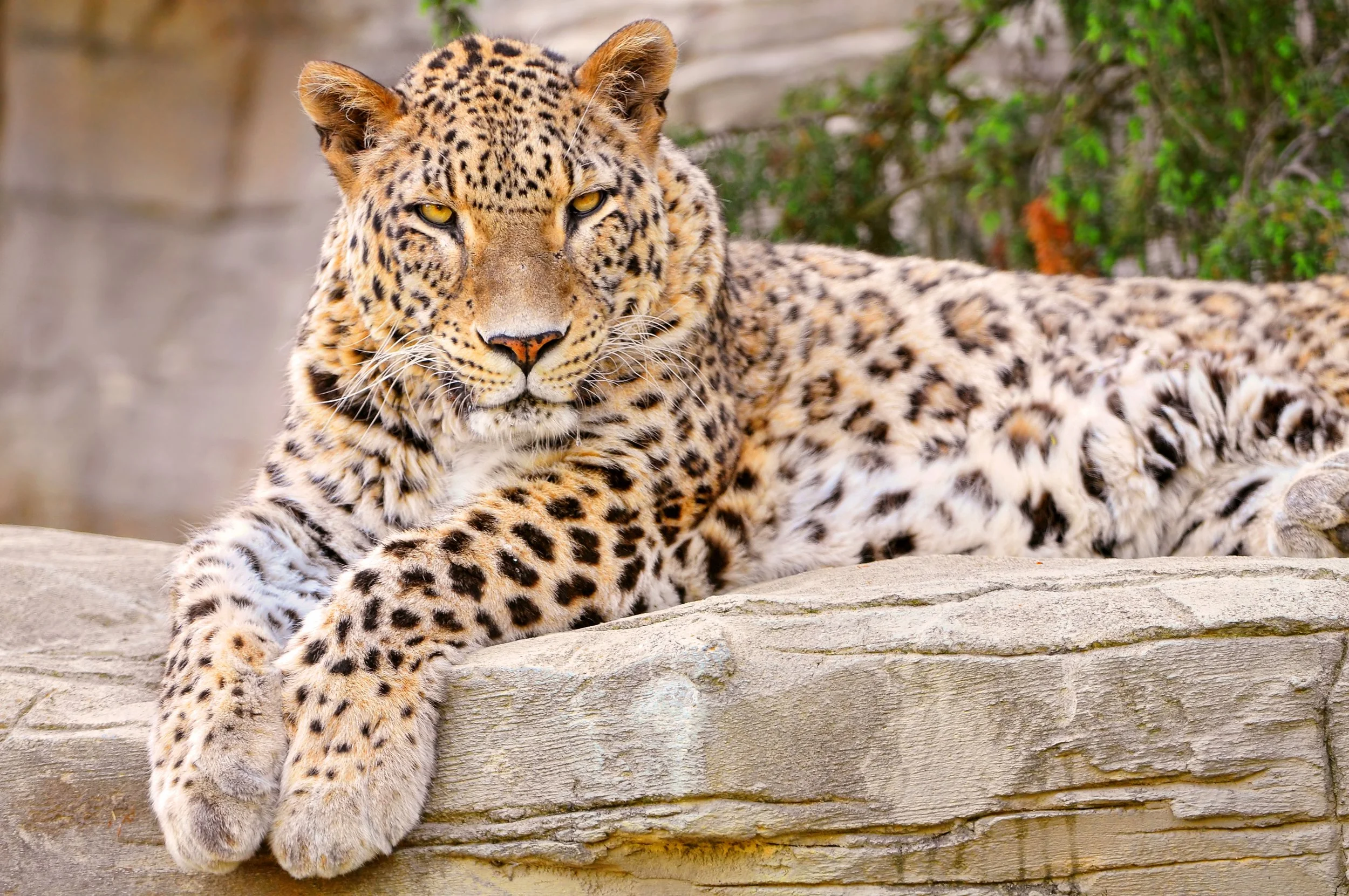
There are thought to be only about 1,100 Persian leopards (also known as Caucasian or Anatolian leopards) remaining worldwide. (Flickr)
As many as 80 Persian leopards now inhabit Turkmenistan, according to careful monitoring by national researchers in 2025, per Business Turkmenistan. Though this number may seem small, it indicates recent progress in conservation efforts. It also means that Turkmenistan has the second-largest population of Persian leopards in the world (second to Iran, which is home to an estimated 500-700 individuals, according to the Earth Island Institute).
In total, experts estimate that only about 1,100 Persian leopards remain, earning them a classification of Endangered on the International Union for Conservation of Nature (IUCN) Red List, according to the Earth Island Institute. 70% of the species’ historic range - which once reached from the modern-day Caucasus region through Iran and into parts of Central Asia - has been lost. The leopards are severely threatened by the fragmentation of their remaining habitat and the loss of their natural prey. The continued recovery of Persian leopards and other large predators depends largely on the health of ungulate populations (gazelles, mountain goats, and similar animals), according to Vesti Abad. Poaching and other direct conflicts with humans also pose significant threats.
Still, the 2025 report confirms “not only the stable presence of this rare predator in key ecological zones” but also provides “encouraging signs of population recovery,” according to The Times of Central Asia. The data is especially encouraging because the leopards are essential for biodiversity, both in Turkmenistan and the wider region.
The report came after an escalation in protection and monitoring efforts in 2025, including stronger law enforcement and an increased number of camera traps. These efforts, in turn, are a part of Turkmenistan’s expanded environmental commitments. In 2024, the nation joined the Convention on International Trade in Endangered Species of Wild Fauna and Flora (CITES Convention), an international agreement between governments that aims to ensure that trade between endangered plants or animals does not threaten the health or survival of those species. For several years, Turkmenistan has also participated in the Convention on the Conservation of Migratory Species of Wild Animals, a United Nations environmental treaty that “provides a global platform for the conservation and sustainable use of migratory animals and their habitats.” Domestically, it also implemented its new Central Asian Mammals Initiative (CAMI) Action Program for 2026–2032.
Despite these international efforts, the overall biodiversity of Turkmenistan and the rest of Central Asia has continued to decline - as it has all over the world - due to poaching, agriculture, and global climate change, according to the Global Waste Cleaning Network. The status of Persian leopards likewise remains fragile, especially in light of the difficulties of cross-border biological conservation efforts.