
2026 Aichi-Nagoya Asian Games Build Tension in Japan-Korea Relations
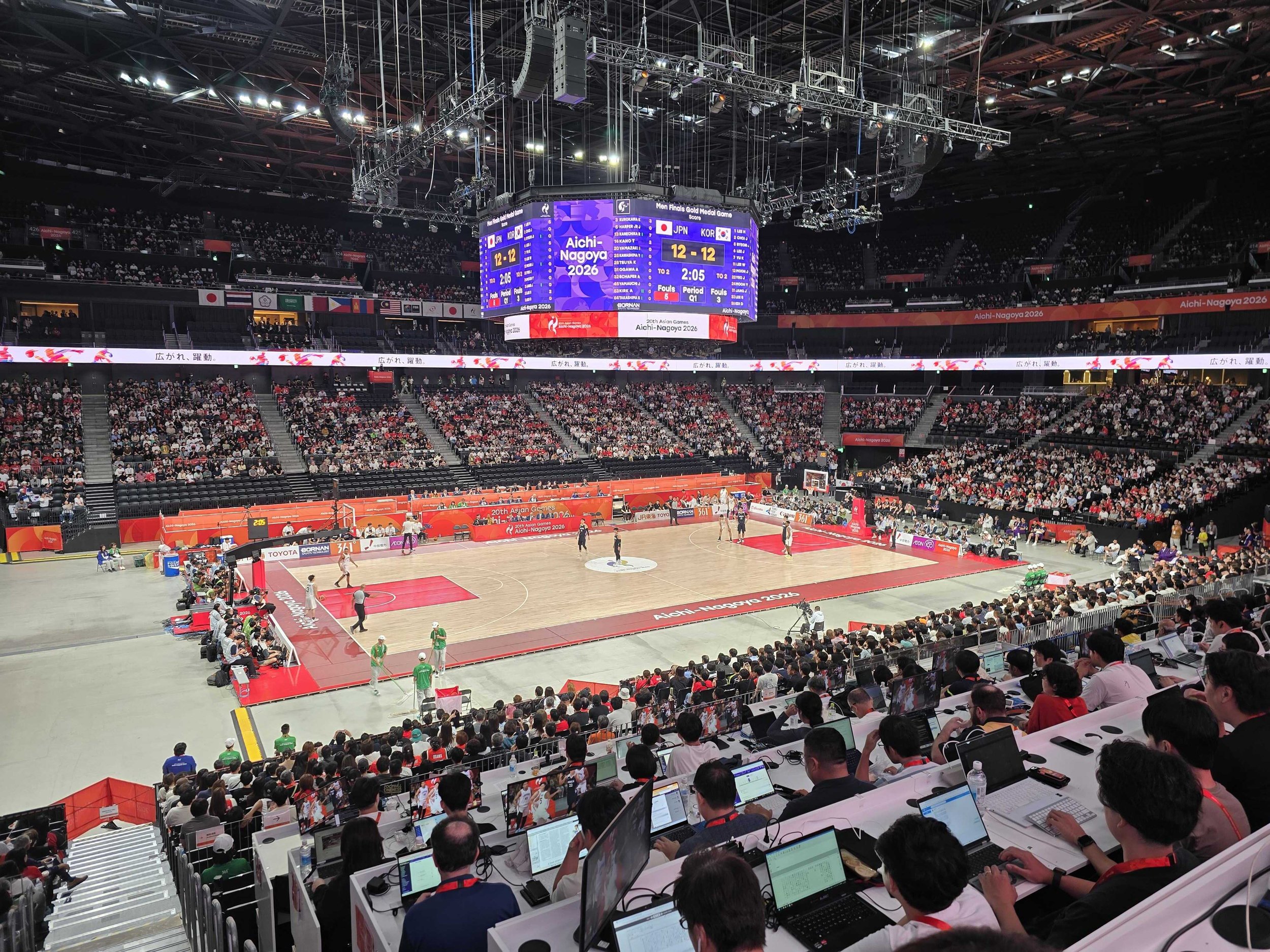
2026 Asian Games Basketball Finals between South Korea and Japan (Trainholic, via Wikimedia Commons).

The 2026 Aichi-Nagoya Asian Games concluded on October 4, with 45 countries from across the continent competing in 43 different sports. This year’s host country, Japan, has been criticized for poor management– especially by South Korean athletes and sports organizations. Yu Seung-min, the president of the Korean Sport & Olympic Committee, stated that the event deserved an “F grade.” South Korean athletes have been especially vocal, creating new friction between the two countries and raising concerns about the quality of the games.
Controversies impacting the South Korean team arose soon after the team landed in Japan on September 17. Per The JoongAng, Japanese police restrained the South Korean athletes from holding up their flag (the Taegeukgi) at the airport. Past Asian Games and other international competitions, such as the Olympics, have had no rules against a participant country displaying its own flag, and the South Korean team has questioned why their country should be the exception to this unspoken rule.
Another source of tension was the constant schedule conflicts. The bus that was supposed to pick up the South Korean team before the men’s basketball finals between South Korea and Japan never showed up, forcing the team to cancel their morning training. There was another problem with the soccer team when both the South Korean and Qatar team buses arrived at the baseball stadium instead of the originally planned soccer field. The organizing committee allocated both buses to the teams, making it clear that the soccer teams arrived late at the soccer field due to an organizational mistake.
Many of the problems the South Korean team faced also affected most participating countries, so it is difficult to claim Korea was specifically targeted. However, the South Korean media reacted most strongly to the anthem mix-up during the preliminary hockey match between South Korea and Bangladesh, when the North Korean national anthem was played instead of South Korea’s. The field announcer claimed they had “accidentally played the wrong country’s anthem” but made no move to correct the mistake, and ended up playing the Bangladesh national anthem instead. The South Korean hockey team immediately sent a letter of complaint to the organizing committee and asked for an official apology, and the President of the South Korean Sport & Olympic Committee supported them by publicly stating that “a country’s national anthem should never be played incorrectly in an international sports competition.”
With the Aichi-Nagoya Asian Games now concluded, reactions to the overall success of the games are mixed. Many athletes have celebrated their results, while some Japanese residents have voiced dissatisfaction with the organizing committee’s handling of the event. The citizens have mentioned that they are "embarrassed by the games” and are raising their voices against the organizing committee. The media is interested in how the organizers will address these concerns to ensure they do not resurface at future Asian Games.