Italy Bans Burqas in Schools, Caps Foreign Students in Classes
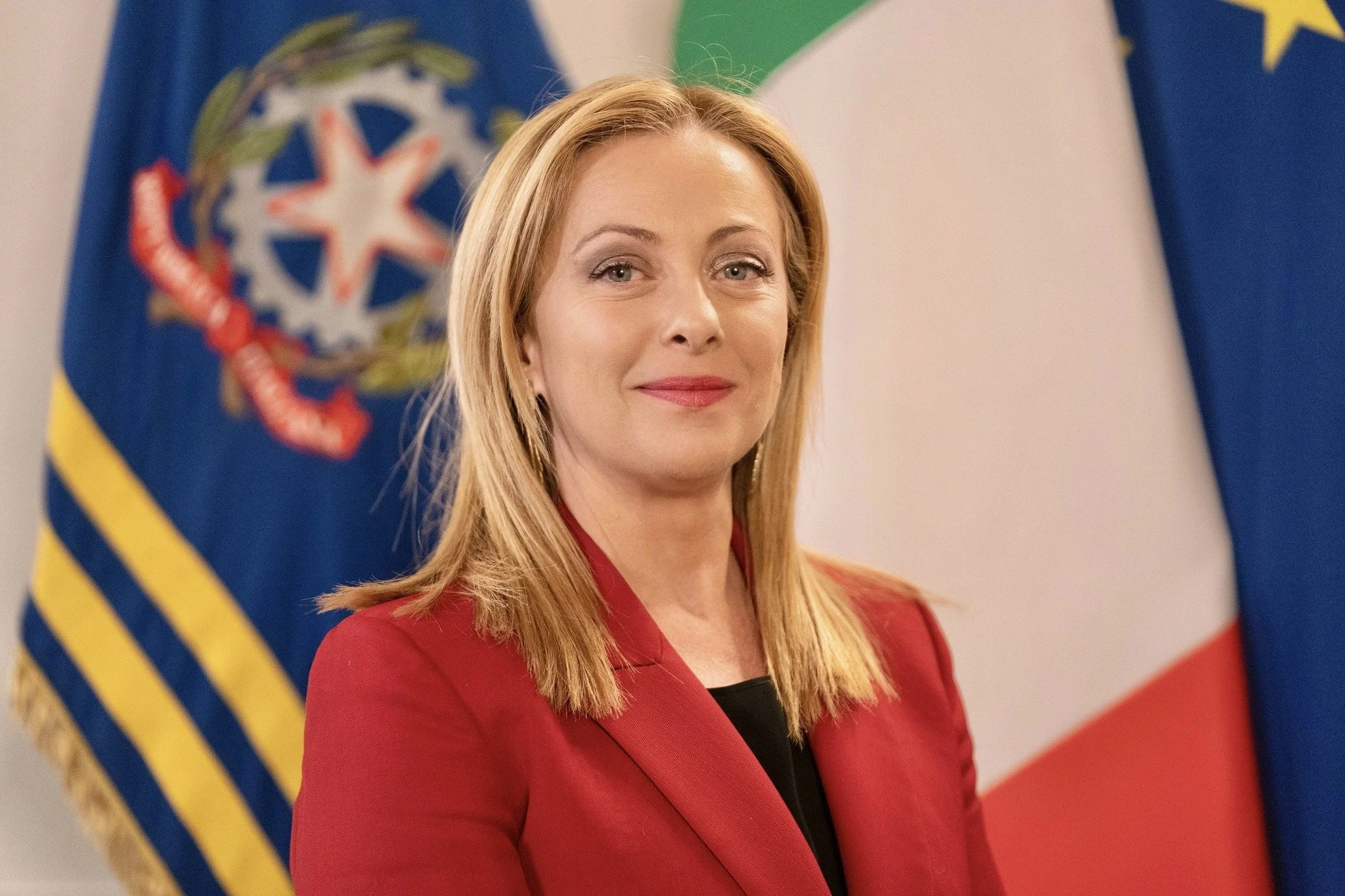
31st Prime Minister of Italy, Giorgia Meloni (governo.it).
Italian Prime Minister Giorgia Meloni banned the use of burqas and niqabs in schools and limited the number of foreign students who have not already spent sufficient time in the Italian school system to 30% per class. The decree-law was approved on September 24, six days after Meloni’s proposal of the ban at Fenix, the annual national festival of Gioventù Nazionale (the youth wing of her Brothers of Italy party) in Rome.
The decree also provides free Italian-language classes that may become mandatory for parents whose lack of proficiency is considered an obstacle to their child’s integration at school. Failure to comply with such a requirement could result in a fine of up to €1,000, or roughly $1,140.
“For us, anyone who comes to Italy and wants to build their future here must learn our language, understand our culture, and respect our rules,” Meloni said at Fenix. “It is the only serious way to welcome them.”
The ban does not extend to hijabs, which leave the face visible. The government has instead framed the burqa-niqab ban partly as “a matter of security.” A burqa covers the face and body, with a mesh screen over the eyes for visibility, and similarly, the niqab covers the face but leaves only the eyes uncovered. Meloni’s reasoning behind the decree pertains to gender equality, announcing that no religion or tradition should force a girl to cover her face in a way that denies her fundamental rights. Education Minister Giuseppe Valditara described the decree as “a matter of civilization,” characterizing the burqa as a symbol of a patriarchal mindset that the Lega opposes.
The 30% cap measure initially raised concerns over whether students would have to change schools to meet the limit. The government has said, however, that when a class exceeds the threshold, local education authorities will instead coordinate with schools to redistribute incoming students to another nearby school.
Valditara also told Corriere della Sera that the cap will not apply to foreign students who have “attended nursery school and are starting Year 1, or successfully completed a few years of schooling, as it can be assumed they have acquired a certain knowledge of Italian. Nor will they apply to pupils with a European passport.”
Once these exemptions are applied, the impact could be limited. Although Valditara said there are 34,000 classes with at least a 30% foreign student body, the head of the Social Policy Lab at Milan Polytechnic predicts that the new decree would likely affect around 300 students nationwide, with roughly 10 schools potentially required to reorganize their classes.
The decree has also drawn criticism from opposition politicians, school officials, and unions, who argue the measures focus more on political messaging than on the problems schools face in practice. The government, meanwhile, maintains that the rules will prevent what Meloni has called “ghetto classrooms” and give students more equal opportunities. With the 30% cap set to take effect in the 2027–28 school year, the measure's practical significance will largely depend on how many students ultimately qualify for exemptions.