
India Detains Gen Z Protest Leaders Amid Election Commission Controversies
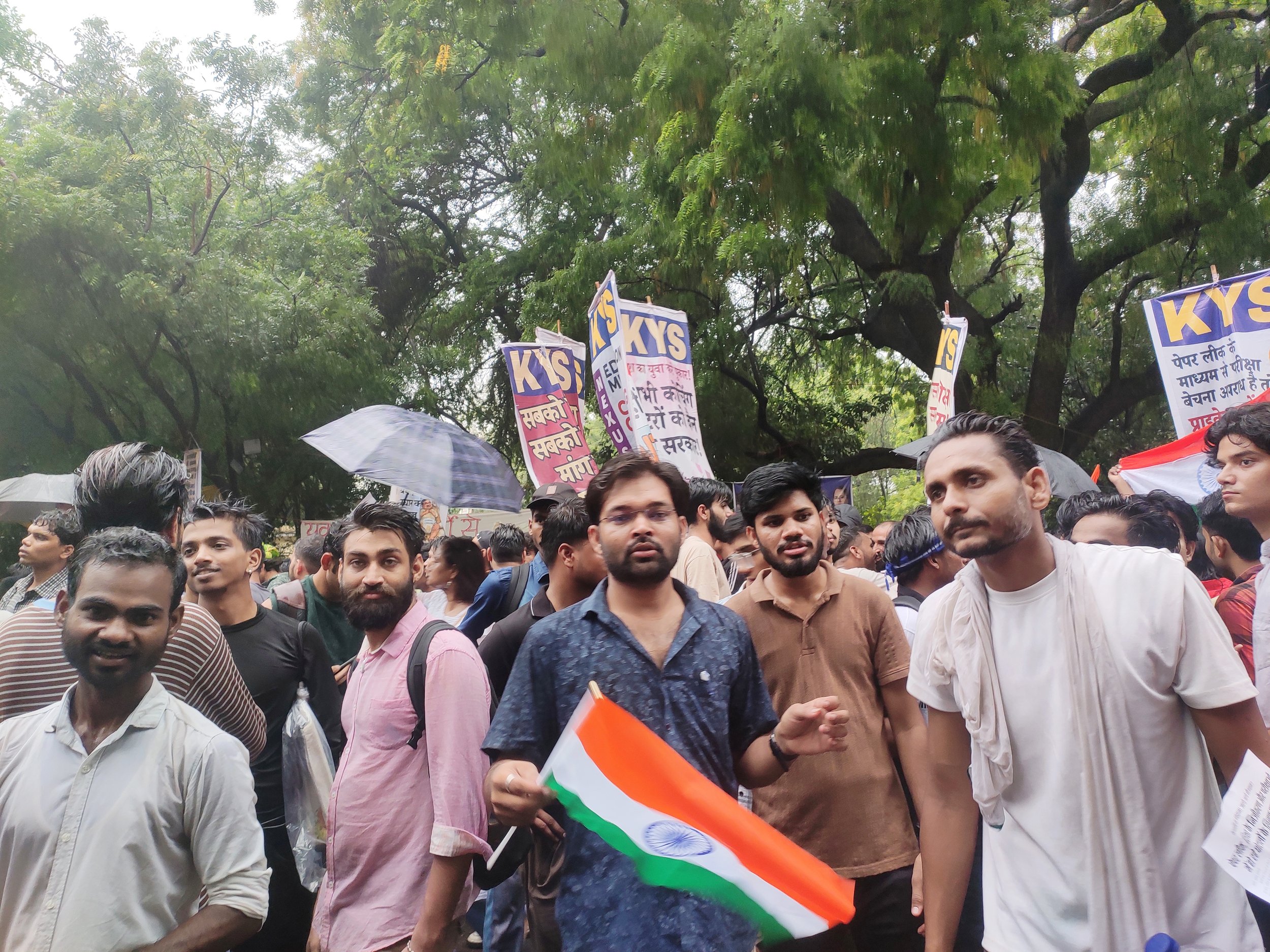
Demonstrators carry India’s national flag at Jantar Mantar, New Delhi's designated protest site, during the exam protests (source: Sumita Roy Dutta, Wikimedia Commons).

Three leaders of India’s Cockroach Janta Party (CJP) were detained by police after arriving in Delhi on October 10. Per The Hindu, Abhijeet Dipke, Saurav Das, and Ashutosh Ranka were en route to attend a protest calling for the resignation of India’s Chief Election Commissioner, Gyanesh Kumar.
According to The Times, Kumar has been heavily criticized for his attempts to revise India’s electoral rolls. Using an exercise known as the Special Intensive Revision (SIR), he is believed to have deleted more than 130 million names from Indian registered voter lists. Per The Indian Express, Kumar ignored repeated objections from India’s other two Election Commissioners, who state that SIR decisions were made without their knowledge or approval. As of October 7, India’s Election Commission denies any wrongdoing, alleging that the SIR has removed duplicate, dead, and ineligible names and blocked out “foreign illegal immigrants.”
According to The Guardian, India’s government deployed over 25,000 police and security personnel to end the planned demonstration. Officials blocked off Delhi’s roads and are believed to have detained tens of thousands of people. These decisive measures have also caused significant transportation problems: nearly 50 metro stations were shut down, and all trains headed to Delhi’s two main stations were canceled for 10 hours. Less than 24 hours after the crackdowns began, UN Human Rights Spokesperson Thameen Al-Kheetan urged Indian authorities to “exercise utmost restraint,” calling for wrongfully detained protestors to be “immediately and unconditionally released.”
Dipke, Das, and Ranka’s detainments highlight the CJP’s evolution into a dominant political voice for India’s Gen Z population. According to Al Jazeera, CJP initially emerged in May 2026 as a satirical political movement after India’s Chief Justice Surya Kant likened unemployed youth to “cockroaches” and “parasites.” Repurposing the insult as a banner, CJP has since joined opposition parties and civil society groups in protesting Prime Minister Narendra Modi's administration. These efforts have incited real change, including the July 25 resignation of Union Education Minister Dharmendra Pradhan. Writing in The Daily Star, Dhaka-based journalist Jannatul Naym Pieal deemed the movement the largest demonstration against the Modi government in years.
The arrests also continue the Indian government’s heavy-handed suppression of the eponymous “Cockroach” movement. Per Al Jazeera, Delhi police attacked more than 10,000 CJP demonstrators who attempted to march on India’s parliament at a previous protest in July, injuring 60. Human Rights Watch denounced the use of batons and tear gas, urging Modi’s administration to investigate the response further.
Meanwhile, the economic conditions spurring India’s youth to protest have not improved: according to the State of Working India 2026 report by Azim Premji University, almost four in ten Indian graduates under the age of 25 are unemployed.
With its leaders in custody and tens of thousands of supporters detained across the capital, the CJP now faces its sternest test since it emerged in May. Kumar remains in office, and the Election Commission continues to defend the SIR as a routine cleanup, despite his own colleagues disputing how its decisions were made, per The Indian Express. Yet each crackdown has drawn wider attention to the movement, with Human Rights Watch’s condemnation in July and the UN’s call for restraint on October 10. What began as an online joke has become a test of how much dissent Modi’s government will tolerate, and as long as joblessness and doubts about voting persist, the cockroaches show little sign of going away.