
New Supreme Court Ruling frees up Seed Sharing in Kenya
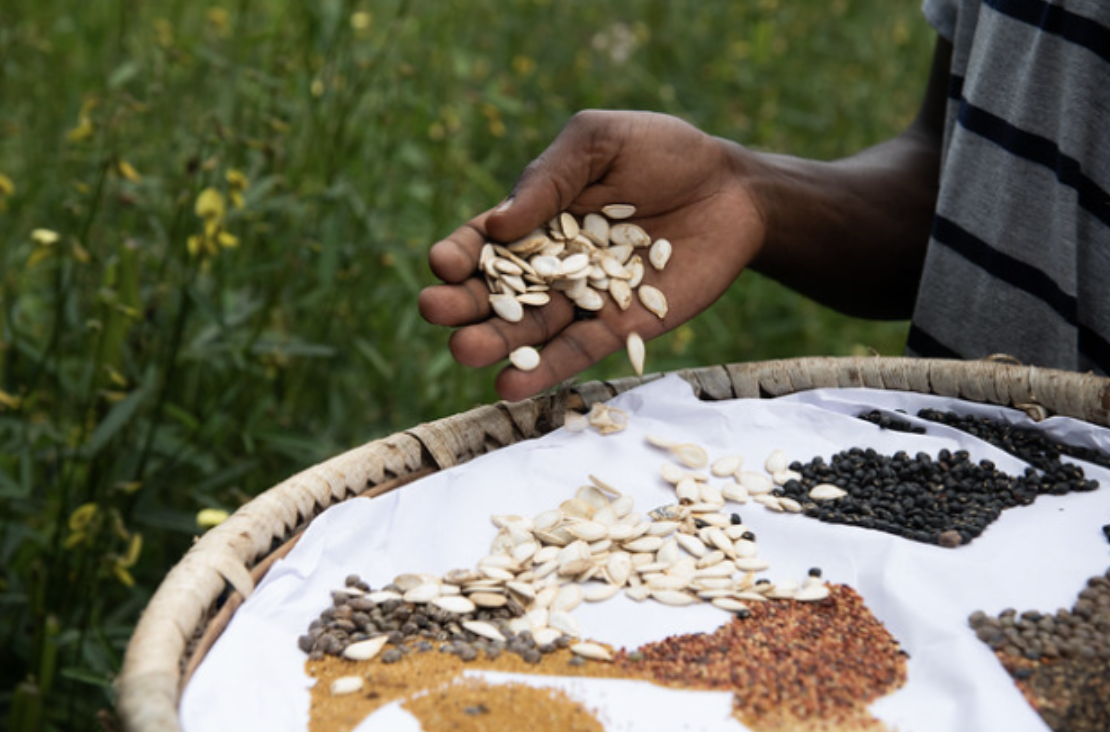
Kenyan farmers in Vhiga county run a seed bank (Flickr)
The Kenyan Supreme Court ruled on November 27 that a law banning local seed sharing was unconstitutional, allowing Kenyan farmers to once again use local seed banks.
For the last 13 years, Kenyan farmers were banned from sharing and selling local seeds—also called indigenous or native seeds—with other farmers. The penalty was two years in jail and/or a fine of KSH one million (USD $7700). When the average meal is KSH 200 or less for a farmer, the fine could cause bankruptcy. On November 27, the Kenyan Supreme Court shot down this law.
Peter King, a farmer in Nakuru County, told The Caravel, “I was glad to learn that seed sharing is not considered a crime anymore. My grandparents in their 90s have been selecting and storing their seeds to plant the next season. They have always been free to share with their neighbours and family.”
Dr. James Wangu, a food transformation associate for Africa at World Resources Institute, told The Caravel, “The cost of [hybrid] seeds in Kenya remains high, and its requirements for external inputs is a big challenge to small scale [farmers] with unreliable income. Thus, improving access of seeds through seed banks on localized seeds will be instrumental in supporting farmers. […] continued production as seed saving, exchange, barter and sharing is entrenched in people's way of life.”
Local seeds are native to the environment in which they are grown and therefore aid long-term sustainability and biodiversity in that ecosystem. Their advantage in sustainability also gives local seeds a special superpower—restoration. Local seeds can restore areas damaged by drought, flood, or other natural disasters and can prevent future climate crises because they suck up carbon, stabilize soil, and limit erosion. They also play a major role in the fight against climate change in places like California and Guatemala.
In Kenya, food rights groups also consider local seeds a promising solution to hunger. Over 20 million people are malnourished in Kenya, with over 76,000 kids suffering from hunger. Extreme hunger results from scarce national resources. Over 80 percent of Kenyan land is arid, and climate change has exacerbated this hunger crisis. Since local seeds are drought- and pest-resistant, food rights groups believe they can serve as a lifeline in an already resource-scarce region.
Local seed use isn’t already widespread because they are comparatively rarer to genetically-engineered seeds. This is despite the fact that they require less land and input costs, like fertilizer, according to Dr. Wangu. Instead, countries rely on hybrid, mass-produced seeds, which have higher yield rates and can be more nutritious, which has led many to champion them as alternative solutions to the hunger crisis. Golden rice, for example, has helped children in Africa and Southeast Asia combat Vitamin A deficiency. However, patents for these crops are concentrated in a few multinationals, which has prevented equitable food distribution.
King believes that the over reliance on hybrid and non-native plants comes from a profit-driven globalization model. “[Multinationals] have infiltrated the system to the point where our government will not buy indigenous grain from farmers,” he said, “forcing them to buy hybrid varieties that cannot be replanted.”
Dr. Wangu added, “Corporations treat seed as a commodity of trade with the assumption that one variety can be suitable in multiple countries without focusing on culture and seed sovereignty of the people. However, seeds are localized as well as the food system for a certain region. Therefore, seed is more than just a good for trade, but it's an integral part of human survival.”
Seed banks are a possible solution to the short supply of local seeds. Seeds can be stored and replanted directly by farmers to help the most vulnerable. According to King, they are relatively new in Kenya. However, he believes that the Supreme Court’s decision is an important step in increasing mitigation measures for climate change and a win for food security and farmers.
King reflected, “I believe that food production should not be overcommercialized. Everyone should have the right to grow his/her own food and some more. The ruling has created more awareness of the fact that there was a problem. Even those who were ignorant now know about seed saving and sharing. I believe it will have a positive impact on the hunger situation in Kenya.”