
Milei Submits Bill to Penalize Unauthorized Falklands Resource Extraction
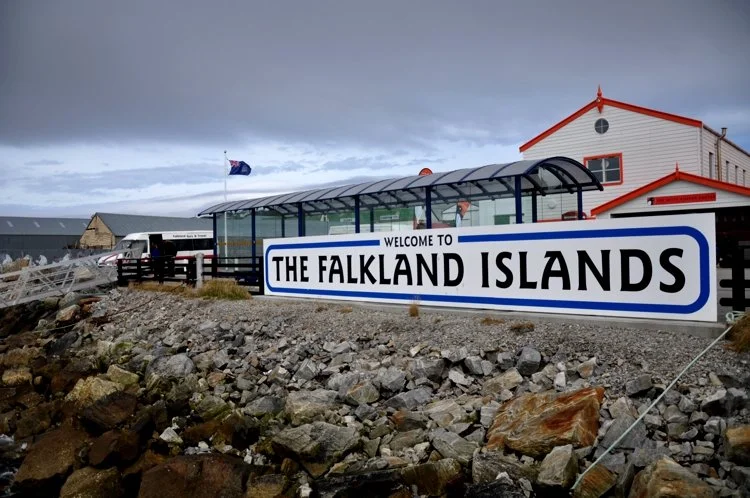
The Falkland Islands have been under British rule since 1833 (Victor//Wikimedia Commons).

On September 17, Argentine President Javier Milei submitted a bill, the Proyecto de Ley de Defensa de la Soberanía Nacional, that seeks to toughen penalties for companies and individuals extracting the Falkland Islands’ natural resources without Argentine authorization. Milei’s proposed sanctions focused primarily on the oil sector. They specifically target Sea Lion, the first crude oil project in the islands led by the Israeli company Navitas and British company Rockhopper.
The bill is structured on three pillars: pushing those who exploit Argentina’s natural resources illegitimately, creating incentives for them to cease such conduct, and providing the national government with tools to protect itself against external threats. Furthermore, it seeks alignment with the security policies promoted by Donald Trump. The bill also proposes creating a national security council and a terrorist registry, and authorizes the military to operate within the country to protect strategic installations. The bill replaces a 2011 law that only restricted hydrocarbon extraction. The new legislation expands Argentina’s reach to penalize the unauthorized extraction of any natural resource on the Argentine continental shelf.
Argentina has a history of fighting for this land. In 1982, Argentina and the United Kingdom fought a war that ended with Argentine surrender after 74 days of conflict. The war killed 649 Argentines and 255 British troops. Today, Milei has doubled down on Argentina's claim over the islands after United States President Donald Trump said Washington was open to reviewing its historically neutral stance on its territory. The push also follows the World Cup, where the Argentine national team defeated England and displayed a banner reading, “The Falklands are Argentine.”
Jack Ford, president of the Falkland Islands Legislative Assembly, linked Milei’s rhetoric to the presidential elections scheduled for 2027 in Argentina and his recent setback in the polls. “It's something we see quite often: when domestic issues become difficult for a president or an election cycle approaches, attention often shifts to external issues and the focus turns to the islands. So, in that sense, I'm not surprised." Ford also says that the population of the archipelago is accustomed to the pressures and threats from Argentina. He described measures taken by the Argentine government as “failed bullying tactics” that do not alter daily life on the islands or generate concern among international companies operating there.
Alberto Weretilneck, governor of Rio Negro, endorsed the bill. “Defending sovereignty also means defending our resources and having the tools to act against those who try to seize what belongs to Argentinians. The Malvinas are a national cause that transcends any political differences,” he said. He also urged Argentina to adopt a clear state policy to have its sovereignty and natural resources defended and respected.
Political scientist Mariana Alteieri says, “When Argentina emancipated itself from Spain, the Falklands were part of it, and then they were stolen from us, and that ties into Argentina’s trauma, to what it could be and is not.” She describes the islands as an inseparable part of Argentine identity, especially in the south.
Whether the penalties change anything depends on the companies. Ford says they are not concerned, although Argentina’s new law puts Navitas and Rockhopper directly in its sights. Sea Lion, the first crude oil project on the islands, will show which side is right. Although the war over the Falkland Islands ended in 1982, the dispute continues today, with Washington’s position and the islands’ natural resources further complicating the debate.