
Senegalese Feminism Struggles with Persistent Violence Against Women
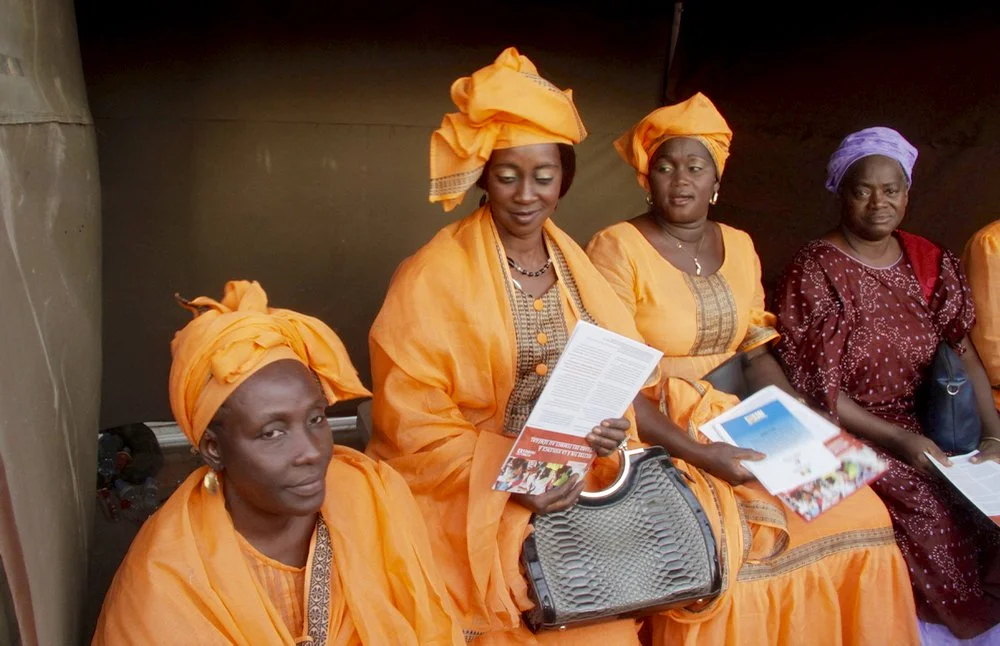
Senegalese women participate in the UN’s “orange the world” campaign against gender-based violence (UN Women Senegal).
Senegal’s feminist movement is demanding action after the murder of Fatoumata Baldé on September 13, marking the tenth “femicide” reported in the country this year. Baldé was found dead in her home in Sangharé Coly, a rural village in southeast Senegal. Her husband, Alphousseyni Baldé, whom she shared the home with, was later placed in pretrial detention and is now being prosecuted in connection with her death.
The case has since drawn attention from WaxJotna, a Senegalese feminist movement whose name roughly translates to “speak now” in Wolof. The movement focuses its work on supporting victims of gender-based violence, mobilizing citizen action, and pressing government institutions for reform.
Its response comes shortly after Senegal officially validated its second National Action Plan for the Eradication of Gender-Based Violence and Promotion of Human Rights, known as PAN VBG 2. WaxJotna welcomed the new plan, calling for it to be reflected in “concrete” measures, including protection mechanisms and legal responses addressing gender-based violence.
A national survey conducted by Senegal’s National Agency of Statistics and Demography between 2023-2025 found that 31.9 percent of women aged fifteen and older had experienced at least one form of violence in the past twelve months, whether it was physical, psychological, sexual, and/or economic. This number rose to 42.7 percent among women between the age of 15 and 24; Fatouma Baldé was 23 at the time of her death. The survey further found that 70.2 percent of Senegalese women have experienced violence since they were married.
The Senegalese government’s first PAN VBG was implemented from 2017 to 2021. According to a national review submitted to UN Women, the plan proposed measures such as offering free legal services for survivors and initiating communication campaigns against violence on women and girls. It also identified gaps in Senegal’s response at the time, including its insufficient enforcement of existing laws, a lack of state-run shelters, and limited services for survivors. WaxJotna aims to target these gaps, which it says still exist today, in its efforts to change how Senegal responds to gender-based violence.
Additionally, the movement argues that the current legal system does not adequately account for gender-based killings. For instance, WaxJotna called on the state to recognize femicide as an autonomous crime in Senegal’s penal code after the murders of a fourteen-year-old girl and of a two-year-old child just two days apart in July. In response to Fatoumata Baldé’s death, WaxJotna insisted more forcefully on urgent implementation of this reform.
The group has also taken its campaign to the streets. In March, more than 100 people gathered in Dakar, the capital, for a WaxJotna sit-in following the killing of Khady Sow, a pregnant TikTok creator. One woman in attendance described the exhaustion and sadness she felt seeing these cases happen over and over again: “You end up getting used to it.”