
TotalEnergies Natural Gas Project Continues Amid Environmental and Human Rights Concerns
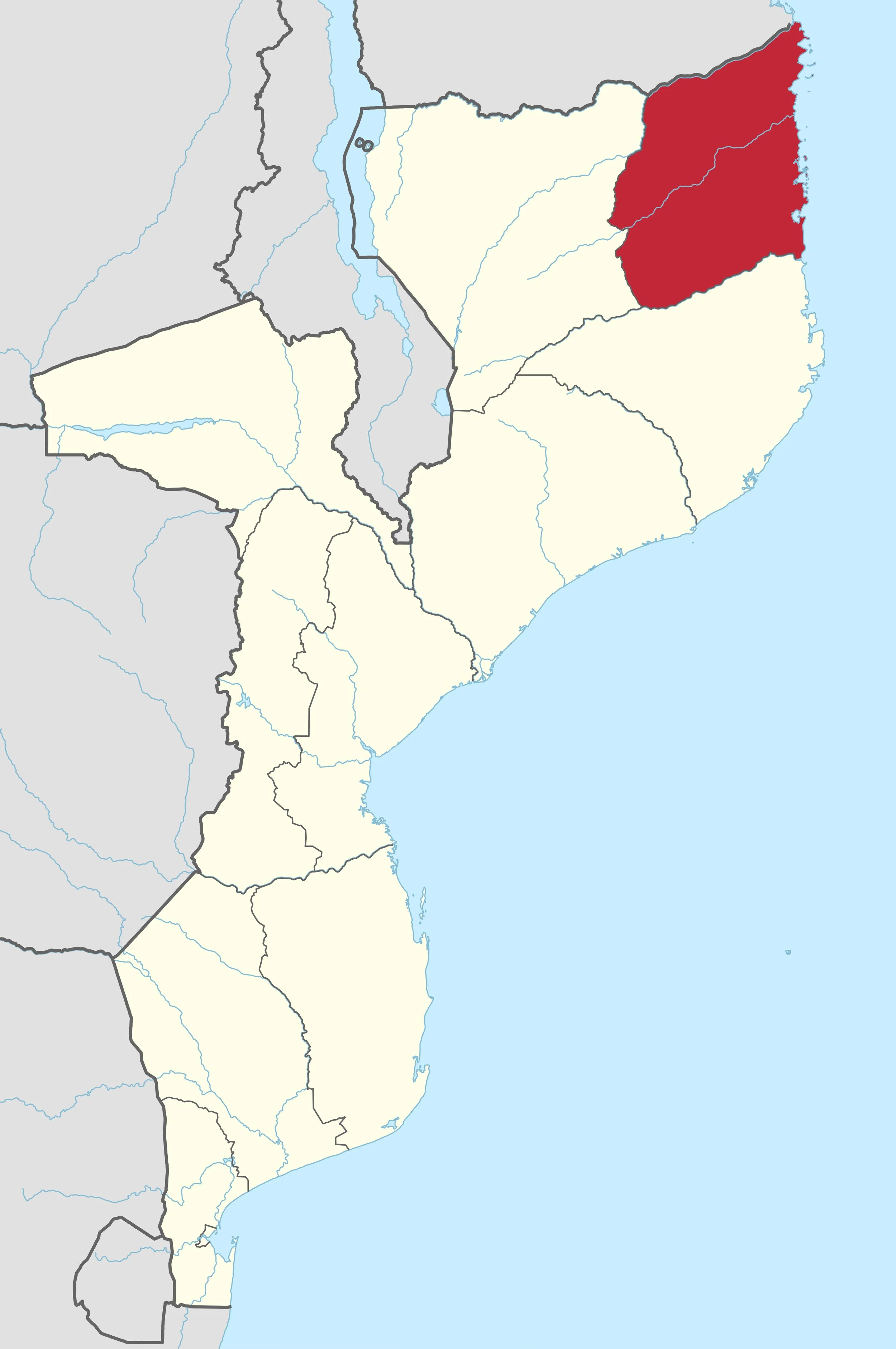
The province of Cabo Delgado, highlighted in red, hosts TotalEnergies’ onshore and offshore LNG pipeline project, which resumed after the lifting of a “force majeure” put in place following terrorist attacks in March 2021. (Wikimedia Commons)
French transnational energy company TotalEnergies resumed construction of its $20 billion liquefied natural gas (LNG) pipeline project in northeastern Mozambique in January 2026, after security issues in the region forced a four-year pause on the project.
President Daniel Chapo and TotalEnergies CEO Patrick Pouyanne made the decision to restart the project in November 2025. The agreement came after they determined that the security situation around the project site had improved since the deployment of Rwandan and southern African troops to support Mozambican forces following the brutal terrorist attacks in March 2021, which halted Total’s operations. The Cabo Delgado province, where the LNG project site is located, has been fighting against ISIS and Al-Shabab insurgents that have killed and displaced thousands of locals over the past decade.
TotalEnergies is one of the top energy companies operating in Africa and is present in more than 37 countries in the continent alone. According to The Economist, its African projects produce more than 450,000 barrels of oil and natural gas per day, and its new projects, including the one in Cabo Delgado, are expected to produce another 374,000 daily barrels.
The company declared in a press release that the return of the LNG project will “generate significant economic benefits” to the region, including up to 7,000 direct jobs and a “vast socio-economic development program to benefit communities in the Cabo Delgado province.” Concurrently, President Chapo called the project a “significant step for the national economy” that would boost its position on the world stage as an energy exporter.
At the same time, the LNG pipeline project is raising environmental concerns, much like its other fossil fuel extraction pursuits. Greenpeace International has condemned TotalEnergies in the past for continuing extraction projects for profit despite its “awareness that its products lead to catastrophic global warming,” knowledge that “dates to the early 1970s.”
In a recent statement, British environmental advocacy group Friends of the Earth called the project a “carbon timebomb” that would add to the increasing natural disasters Mozambique and other African nations are disproportionately facing due to climate change. As a recent example, the project’s relaunch coincided with severe floods in other parts of Mozambique that have killed at least 125 people and displaced hundreds of thousands, according to the BBC.
Although TotalEnergies pledged to become carbon neutral by 2050, environmental groups like Greenpeace question the company’s commitment to this goal as it proceeds with fossil fuel projects globally.
Advocacy groups have also repeatedly accused Total of human rights abuses in Mozambique. Survivors of the March 2021 insurgency filed a criminal complaint against the company for “involuntary manslaughter” and failure to protect survivors in the aftermath. Friends of the Earth maintains that the project is linked to human rights abuses and that its very existence is the motivator of such violence. Justicia Ambiental (JA!), Friends of the Earth’s Mozambican wing, is supporting a legal case against Total for its awareness of and “complicity in war crimes, torture and forced disappearance” in the region.
Despite these complaints, Total denies any allegations of wrongdoing and has yet to face legal consequences. The company predicts it will complete construction and begin natural gas extraction in Cabo Delgado by 2029.