
The Case For Ukraine Aid: If Not For Them, Then For Us
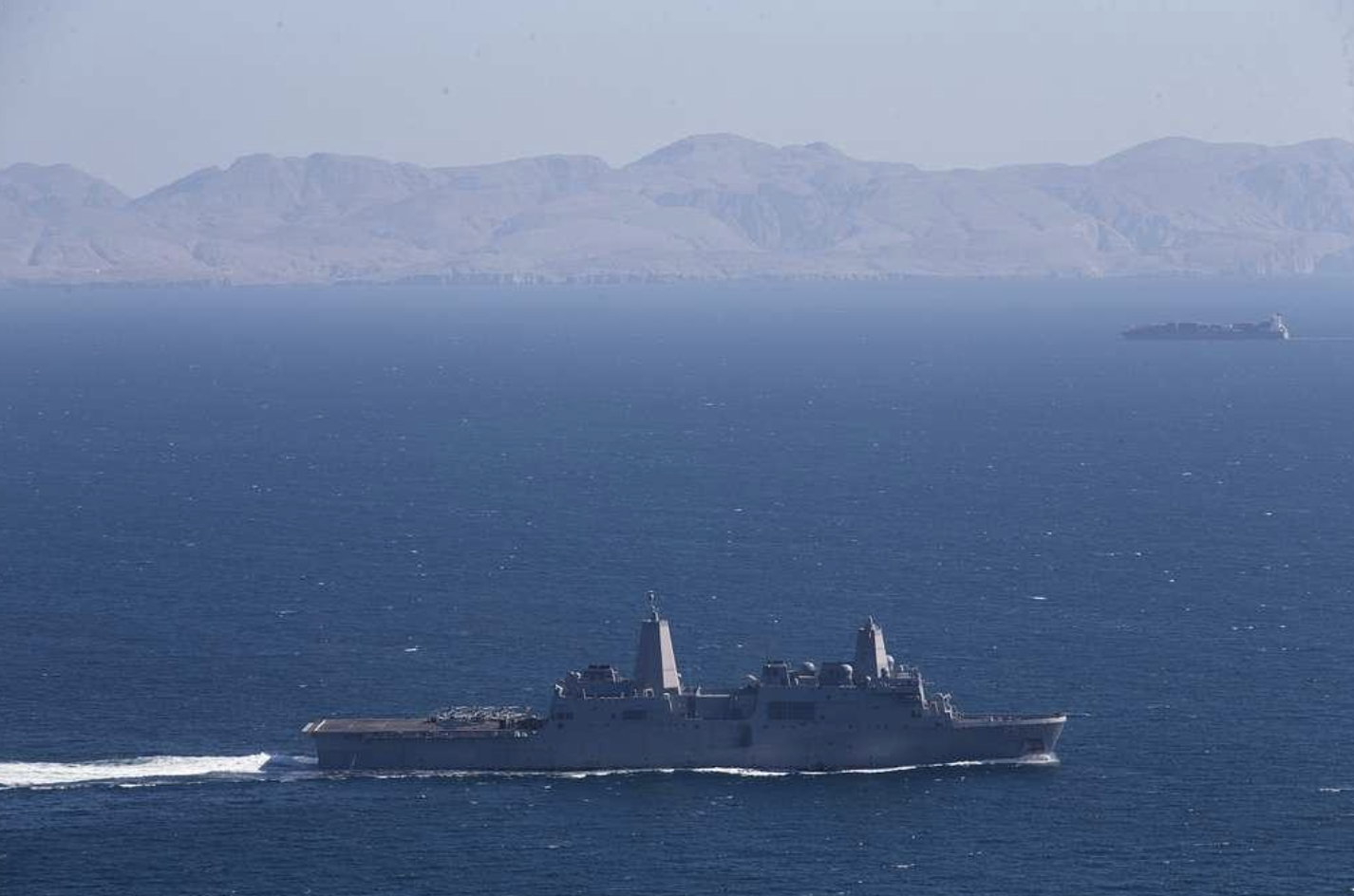
USS Somerset in transit to the Strait of Hormuz (U.S. National Archives)
Two months of whiplash, uncertainty, and conflict between the United States and Iran seemed to reach a pause as U.S. President Donald Trump announced on April 17 that the Strait of Hormuz is reopening, removing a major hurdle in U.S.-Iranian talks. While the situation likely hasn’t completely concluded, oil prices plummeted and fears of further escalation seem at least somewhat abated.
Nevertheless, the brief conflict left its mark. Estimates suggest over 3,400 casualties from the fighting, and gas prices remain much higher than they were several months ago. Less discussed, however, are the effects that the conflict has had on what is arguably the United States’ other most pressing foreign policy flashpoint at the moment: the Ukraine War. In general, the American preoccupation with Iran has been largely detrimental to Ukraine’s war effort and has served to distract the United States from important objectives in Eastern Europe. This reopens a familiar debate: how much further should the United States involve itself in the European conflict?
With the reopening of the Strait providing an opportunity for a re-examination of American priorities, Donald Trump should consider altering his approach toward the war-torn European country by stepping up U.S. commitment in the region. Aside from being the ethical choice in the face of Russian aggression, this would also advance U.S. interests as much as Ukrainian ones, a fact the President has been seemingly unwilling to acknowledge in his handling of the matter so far.
“Epic Fury” and Ukraine
Before the Iran conflict, Russia’s economy struggled. Oil and gas revenue in early 2026 was on the downturn as government deficits soared. Defense spending constituted around eight percent of total Russian GDP while spending to service government debt outpaced both education and health care, and the rate of economic expansion was on track to be even lower than in 2025. The Russian government was even reportedly considering a 10 percent cut to all non-military spending, which would have had ripple effects across the economy.
Then the United States and Israel began their joint strikes on Iran and everything changed. The strikes brought propaganda and strategic benefits for Russian President Vladimir Putin. His “special military operation” in Ukraine is illegal under international law, but so was Operation Epic Fury, the military codename for the strikes on Iran. “Unilateral action without consensus risks a permanent cycle of instability,” the International Bar Association states. “This ‘Epic Fury’ era enables leaders like Israeli Prime Minister Benjamin Netanyahu and Russian President Vladimir Putin, and now increasingly President Trump, to flout international norms with near impunity.” With the United States and Israel also participating in illegal military operations, the United States forfeits its legal high ground, allowing actors like Vladimir Putin to deflect criticism by pointing to American actions as evidence of hypocrisy.
Additionally, Epic Fury has depleted critical U.S. missile stockpiles, such as vital PAC-3 missiles used for the PATRIOT missile defense system, which has been crucial to the Ukrainian war effort. Ukrainian President Volodymyr Zelensky commented in the opening week of the conflict that the United States’ allies in the Middle East expended around 800 PAC-3 interceptors in just three days to shoot down Iranian missiles and drones. Lockheed Martin, the primary contractor for PAC-3s, had a goal of producing just over 600 for all of 2025—already less than what was used in under a week. The Institute for the Study of War reports that Ukraine was already in the position of selectively using its PATRIOT system due to dwindling stockpiles. With Epic Fury further damaging supply, Ukraine’s inventory of PAC-3 missiles will also be depleted, limiting its ability to defend itself from Russian air attacks.
But most importantly, the strikes brought a temporary but substantial economic reprieve for Russia. Over the month of March, spring thaws brought with them renewed fighting and notable setbacks for Russia. They opened with a costly and miscalculated first attempt during the week of March 17 that cost over 1,700 troops in a single day. They followed-up the week after with a new offensive in the Zaporizhzhia region by bombarding Ukraine with nearly 400 drones, according to Ukraine’s Ministry of Defense and AP, but this too faced problems. Ukraine thereafter initiated counterattacks with notable success that created a large contested zone along the front.
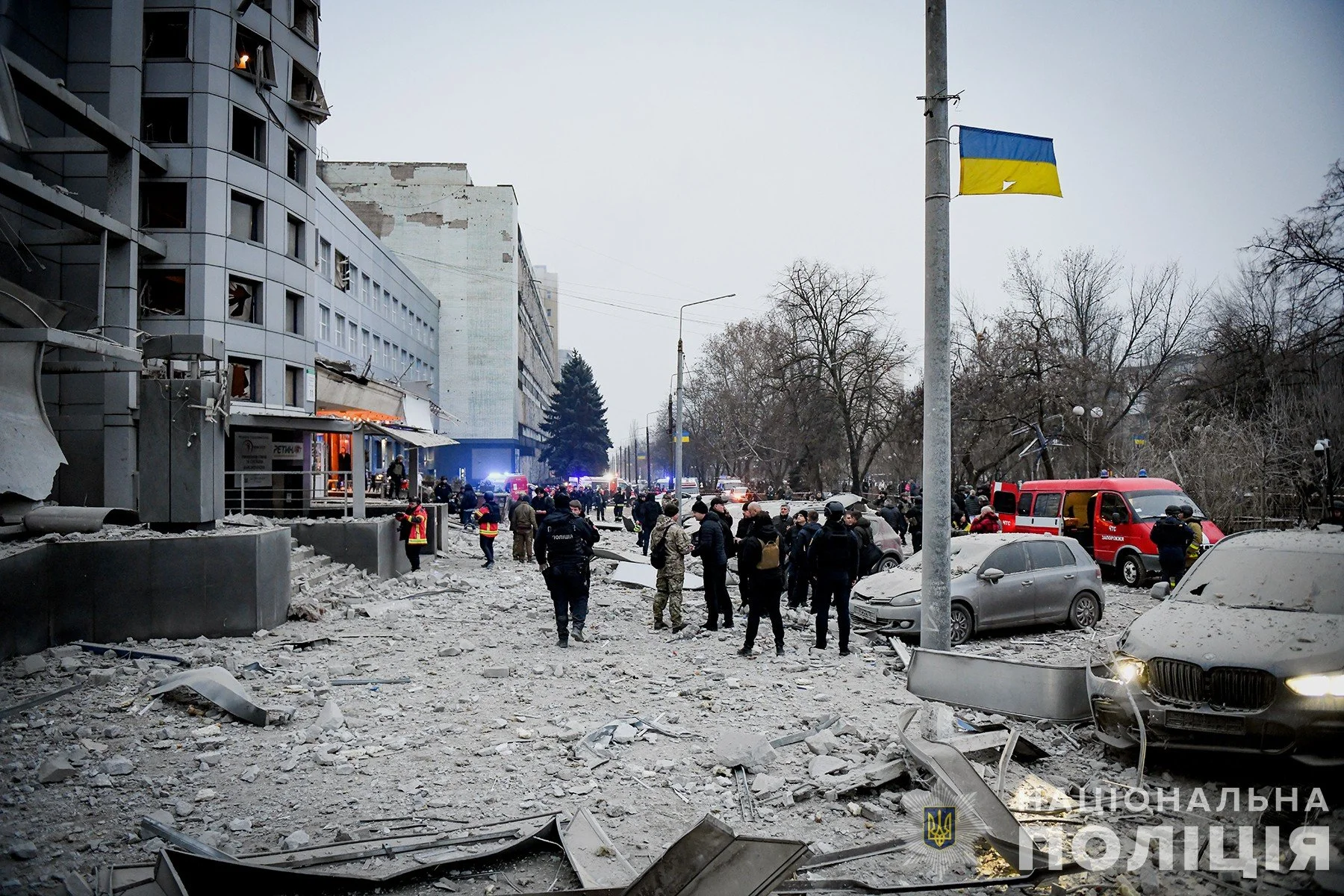
The Ukrainian City of Zaporizhzhia after Russian missile attacks (Wikimedia Commons)
With the closing of the Strait of Hormuz, the price of oil—Russia’s primary export—skyrocketed, boosting the country’s earnings via more sales and thus more taxes it could levy on those sales. Moreover, to reduce the domestic impact of the higher gas prices, President Trump temporarily eased sanctions on Russian exports. The result was a 14 percent increase in oil revenue over the month of March. This gain is despite the fact that, per Reuters, Ukrainian long range strikes took a toll on Russian export capacity over the same period, decreasing its export volume by around 40 percent.
If Not For Them, Then For Us
While the Iran conflict did result in some minor benefits for Ukraine as well, in general Epic Fury not only distracted the United States from an equally pressing foreign policy dilemma in Ukraine, but also actively hindered its objectives there by weakening Ukraine’s war effort. With military aid to Ukraine already falling to some of its lowest levels of the war, success on the battlefield requires the United States to increase its commitments to offset both the months-long trend of plummeting military support and the U.S.-caused Iran conflict’s detriments to Ukraine’s war effort.
Nevertheless, President Trump remains skeptical. Not only does he have a long history of opposition to Ukraine aid, but there have also been numerous fiery exchanges between the U.S. President and Ukrainian President. Most famously, in March of 2025, the two held a joint press conference in the Oval Office that devolved into a shouting match with Mr. Trump declaring “You don’t have the cards!”
Since then, he has spent his time attempting to broker a peace deal between the warring countries. While the conditions of a potential ceasefire have continually changed, they reveal an important fact: President Trump seems very willing to sacrifice Ukrainian territory. Most recently, according to President Zelensky, Trump floated U.S. security guarantees in exchange for ceding Russian-occupied territory and the remainder of free Donbas, which Zelensky promptly rejected.
These proposals miss the point of what American objectives should be in Ukraine. “Peace at any cost” like the deals President Trump has offered actually harm U.S. interests abroad. Writing in The Washington Quarterly, MIT political scientist Taylor Fravel (2023) demonstrates that China has been watching the West’s response to Russia’s aggression over the course of the war. The rapid formation of a coalition bolstering Ukraine that has challenged Russia’s position in the country has, he argues, had a deterrent effect on Xi Jinping’s eyeing of Taiwan. “In the short to medium term,” Fravel states, “these costs should induce greater caution in Beijing’s calculations about the use of force.”
But he was writing in 2023. Central to Fravel’s conclusion was a robust coalition with unwavering support for Ukraine. This coalition does not seem guaranteed anymore. To protect U.S. interests in Taiwan from the Chinese Communist Party, President Trump should proceed by staying the course of the previous administration: more aid, fewer distractions.
For many, the sticking point is the cost: even if Ukraine aid does have geopolitical benefits, those tax dollars could be put to use at home. But this premise is also flawed: 90 percent of the “Ukraine money” stays in the United States. Marc Thiessen, a Republican and Senior Fellow at the conservative American Enterprise Institute, describes how Ukraine aid is spent in two general methods. Either new weapons are built specifically to send to the battlefield, which takes time, or the U.S. military immediately sends Ukraine weapons from its own stockpiles and then procures newer, higher-tech replacements for itself. In both scenarios, it is American factories in places like Arizona and Pennsylvania who are engaged in manufacturing, creating American jobs. In the latter scenario, there are also vital benefits in pushing the U.S. military to update its aging stockpiles.
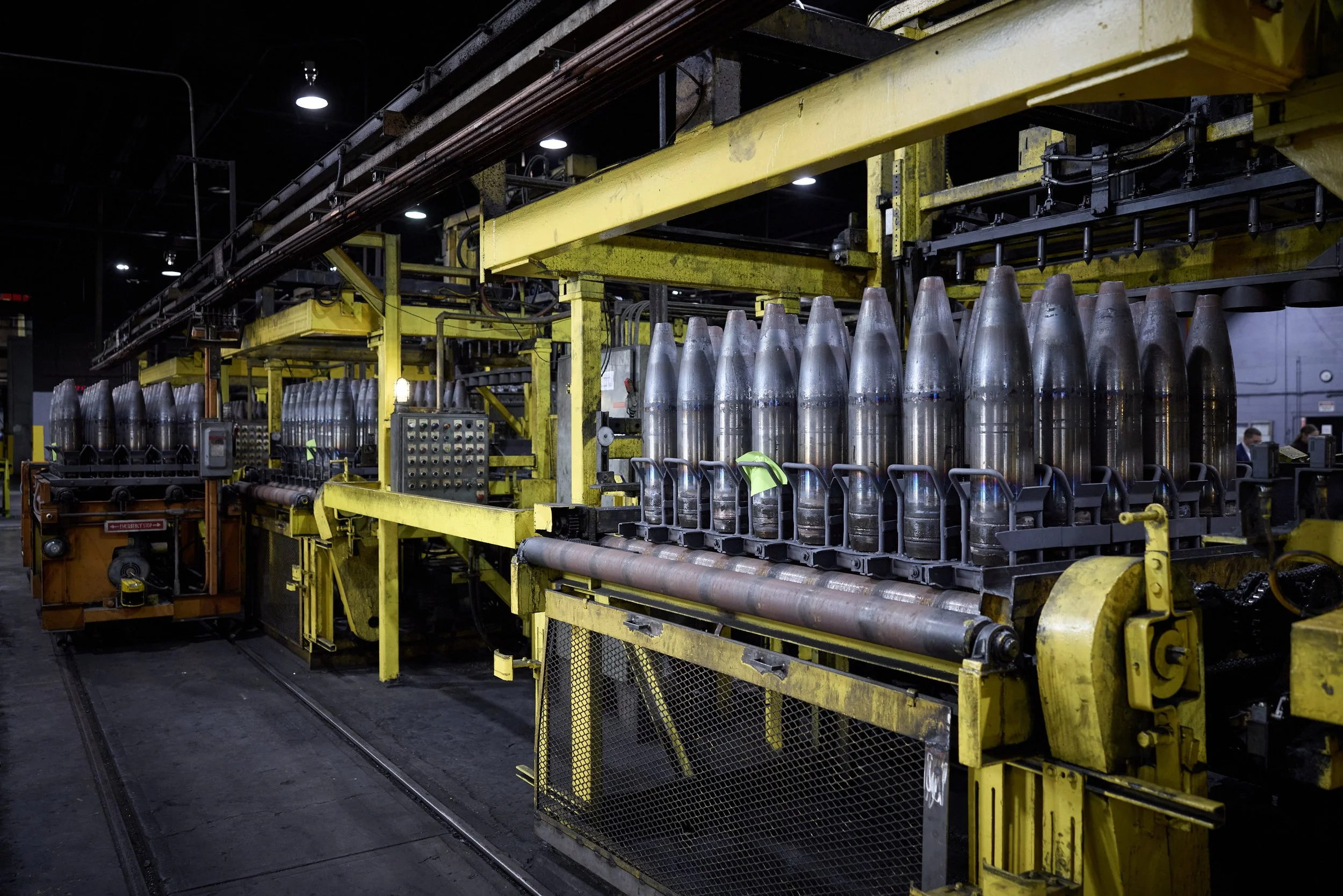

Munitions Factory in Scranton, Pennsylvania, producing 155mm artillery shells (Wikimedia Commons)

This idea also points to the various security benefits of such an approach: the exposing of weaknesses in the U.S. military industrial complex. For instance, Ukraine requires thousands of artillery shells a day to fight, and at the start of the war the United States only produced around 15,000 a month. The materiel demands have forced the military to address this problem and the industry now “is on pace to reach 100,000 [shells] per month,” writes Thiessen (2023). Aid to Ukraine has allowed the United States to address the gaps in its military preparedness in this manner—a win-win.
The larger point is that aid to Ukraine is aid to the United States. In recognizing this fact, we cease to view Ukraine as a burden to be carried against our interests. The war instead becomes a venture between two allies and the rest of the free world, standing together against Russian aggression and authoritarianism while also benefitting domestically from the process. This is a goal worth pursuing instead of sidelining as a distraction whenever other foreign policy flashpoints arise. Donald Trump, instead of arguing with President Zelensky in the Oval Office, should treat him and his country as the partners they are. For both Ukrainian and American interests, led the aid flow.