
Georgian government’s recent educational reforms Spark controversy
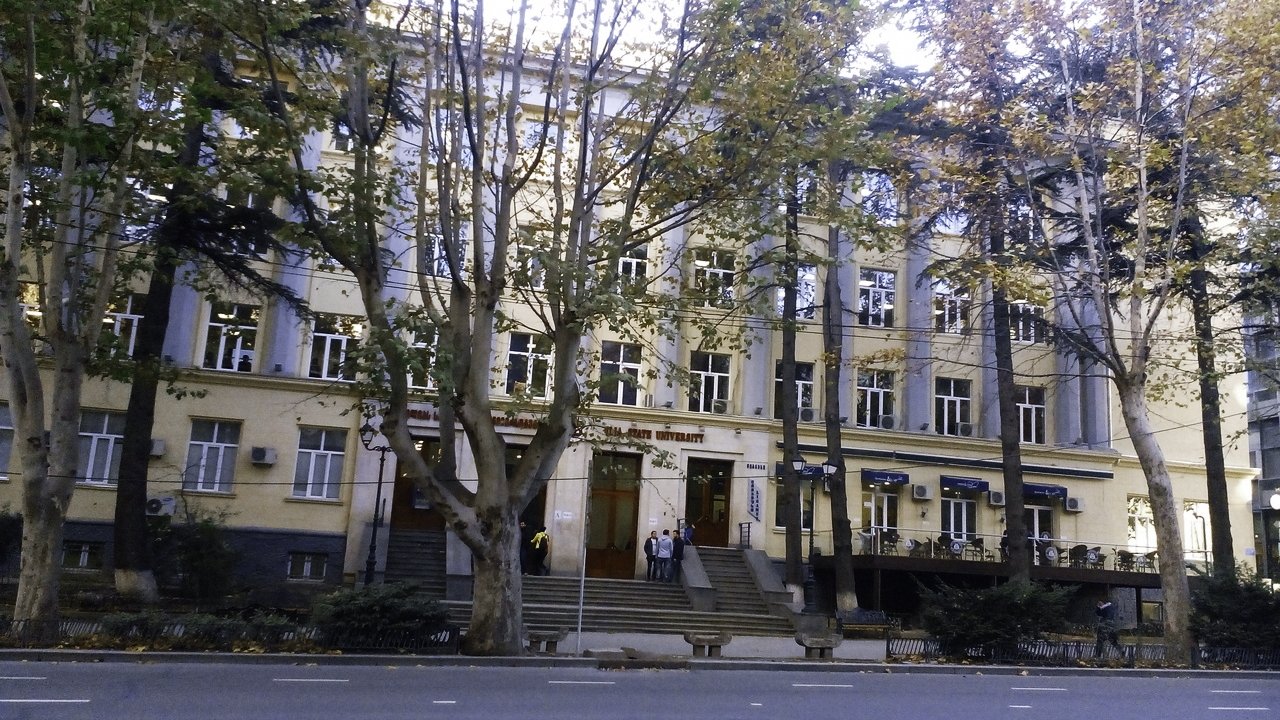
Ilia State University in Georgia’s capital, Tbilisi, is among the most prominent centers of protests against the Georgian government’s recent educational reforms (Wikimedia Commons).

The Georgian Parliament adopted several amendments to the Law of Georgia on Higher Education, as well as other amendments to primary and secondary education laws, on February 4, according to Eurasianet. One of the main changes the reforms to higher education intend to implement is known as the “One City-One Faculty” principle. It aims to reorganize multidisciplinary universities into individual schools tailored to market demands in their respective regions. The broad changes facilitating this principle include budget centralization and the redistribution of academic resources. Additionally, the abolition of the current system for approving school textbooks is among the most significant changes to primary and secondary education, according to OC Media.
Government officials claim that the reforms will “modernize the education system, concentrate limited financial resources, and increase the competitiveness of universities.” Minimizing the duplication of the same programs across separate universities, they reason, will maximize the efficient use of finances for academic infrastructure and equipment. In addition, school specialization is designed to improve the alignment between academics and the labor market, a misalignment that is currently plaguing the country. Another nationwide issue the reform intends to remediate is the lack of higher education institutions beyond the capital city, Tbilisi. 46 of the country’s 61 total universities are concentrated there.
Despite these justifications, the passage of the amendments provoked a sweep of protests across the country, among both the academic community and the general public. Critics contend that the changes will limit the autonomy of institutions and reduce their capacity for conducting interdisciplinary research. There is particular concern regarding international research because the reform constitutes a move away from the implementation of EU higher education standards, which Georgia has been following for the past 20 years. Furthermore, there is widespread anger regarding the prospect of full governmental control over the distribution of resource quotas, admission rates, and textbook content.
The amendments to the Georgian education system come alongside educational reforms taking place in several other countries in the region, most notably Russia. While Russia was “once a frontier of higher education,” the militarization of its schools, the withdrawal from international education standards, and the increase in censorship of scholars—all largely prompted by the war with Ukraine—have become barriers to learning, per OVD-Info.
Other nearby countries, however, appear to be moving towards significant educational improvements. For example, a regional knowledge exchange initiative among Kazakhstan, Kyrgyzstan, Tajikistan, and Uzbekistan, known as the “Skilled Teachers, Skilled Nation” program, is designed to support teachers and facilitate the sharing of ideas for reforms, according to UNESCO. Other efforts by these nations are focused on making education, especially higher education, more accessible and equitable for all.