
Cuba Experiences Nationwide Power Outage as Oil Reserves Dwindle
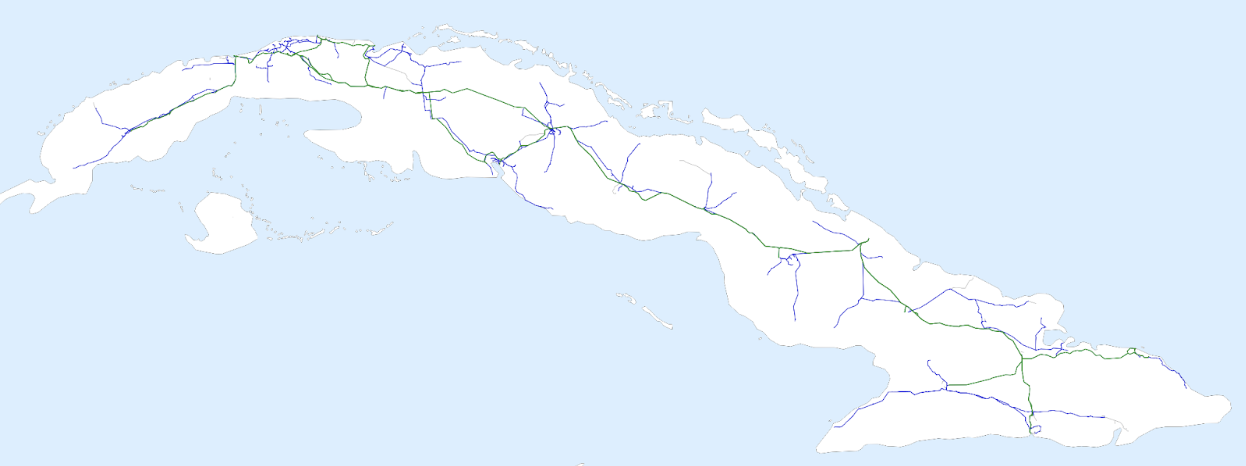
Cuba’s Electrical Power Grid (Wikimedia Commons)

Cuba faced a complete nationwide blackout on March 17, the culmination of persistent electricity shortages caused by months of US oil blockages. Cuba’s president, Miguel Díaz-Canel, claims that the Caribbean nation has not received oil shipments in three months, as Donald Trump’s threat of tariffs on countries exporting to Cuba has dissuaded typical deliveries from Mexico, Russia, and other allies. Following the US’s capture of Venezuela’s president Nicolás Maduro, the country isn’t providing its typical support either. All of this has left Cuba, which produces only about 40% of its own oil, in dire straits in terms of energy. A full day after the blackout began, power had only been restored to about half of the capital city and a few other areas in the west.
The crisis can be felt across the world. State-run petrol stations sell fuel for $1.30 per liter, but they are few and far between; the black-market rate is closer to ten times that price. Given that the average employee makes approximately $15 per month in pesos, diesel is unaffordable for most Cubans. Similarly high cooking oil prices mean charcoal is becoming the cooking fuel of choice, but it is also seeing a rapid rise in price.
The resulting catastrophe has also occurred due to the persistent weakness of Cuba’s centrally planned economy. The communist state has retained control over most firms and still sets prices despite allowing some autonomy in recent years for the private market, reforms driven more by necessity than anything else. The state-run agricultural and mining sectors have collapsed; agriculture now accounts for 15% of exports, compared to 52% at the turn of the millennium. Real wages have fallen a third since 1989. Regular people’s incomes rely largely on the $3 billion still sent each year in remittances. The blackout was as much a symptom of long-term economic malaise as immediate crisis: Cuba’s electric grid is old, eroding, and underfunded. Just a week prior, the western half of the country was hit by a massive outage blamed on a broken boiler.
The regime has made a few attempts at negotiation. Diaz-Canel confirmed on March 13 that he held talks with the US government. The day before, Cuba unexpectedly announced that it would release 51 prisoners, though it claimed that this was an unrelated demonstration of “goodwill” to do with the foreign minister’s recent visit to the Vatican.
On the economic side, Cuba has shown some willingness to diversify and reform. Last month, respective political stances were softened when the US allowed other countries to sell oil to Cuban private firms and Cuba allowed its private firms to buy oil from other countries. To replace its oil consumption, Cuba has turned toward other energy sources. According to Chinese export data, Cuba imports $10 million worth of Chinese solar panels per month, over 30 times the amount it imported two years ago. Cuba may be undergoing one of the quickest energy transitions of all time; by 2030, the government aims for renewables to provide 24% of electricity, up from just 5% in 2024. Still, the amounts aren’t close to enough. An accurate demonstration of the times came when Fidel Castro’s great-nephew appeared on state television to announce a liberalization in rules governing Cuban expats, which almost nobody heard due to the blackout.
Having seen what happened in Venezuela and what is happening in Cuba, should more left-wing countries in the region prepare for the worst? Mexico, Brazil, and Colombia are large, thriving democracies. And though Trump has disputed with all three of their leaders to some extent, particularly over drug-trafficking, they are traditional American allies, as opposed to the long-shunned regimes of Cuba and Venezuela. Additionally, Cuba is uniquely at risk because the US’s Cuban-born Secretary of State Marco Rubio harbors a personal grudge against its regime and has pushed for interference for years. Nicaragua, the last untouched leftist dictatorship in Latin America, appears to be taking heed. It released some political prisoners in January, and then terminated its program allowing visa-free entry to Cubans, perhaps in an effort to appease Trump, a month later. The Donroe Doctrine casts a long shadow—and for Cubans right now, the resulting darkness is both figurative and literal.