
Iran’s Water Crisis Is the Regime’s Self-Inflicted Time Bomb
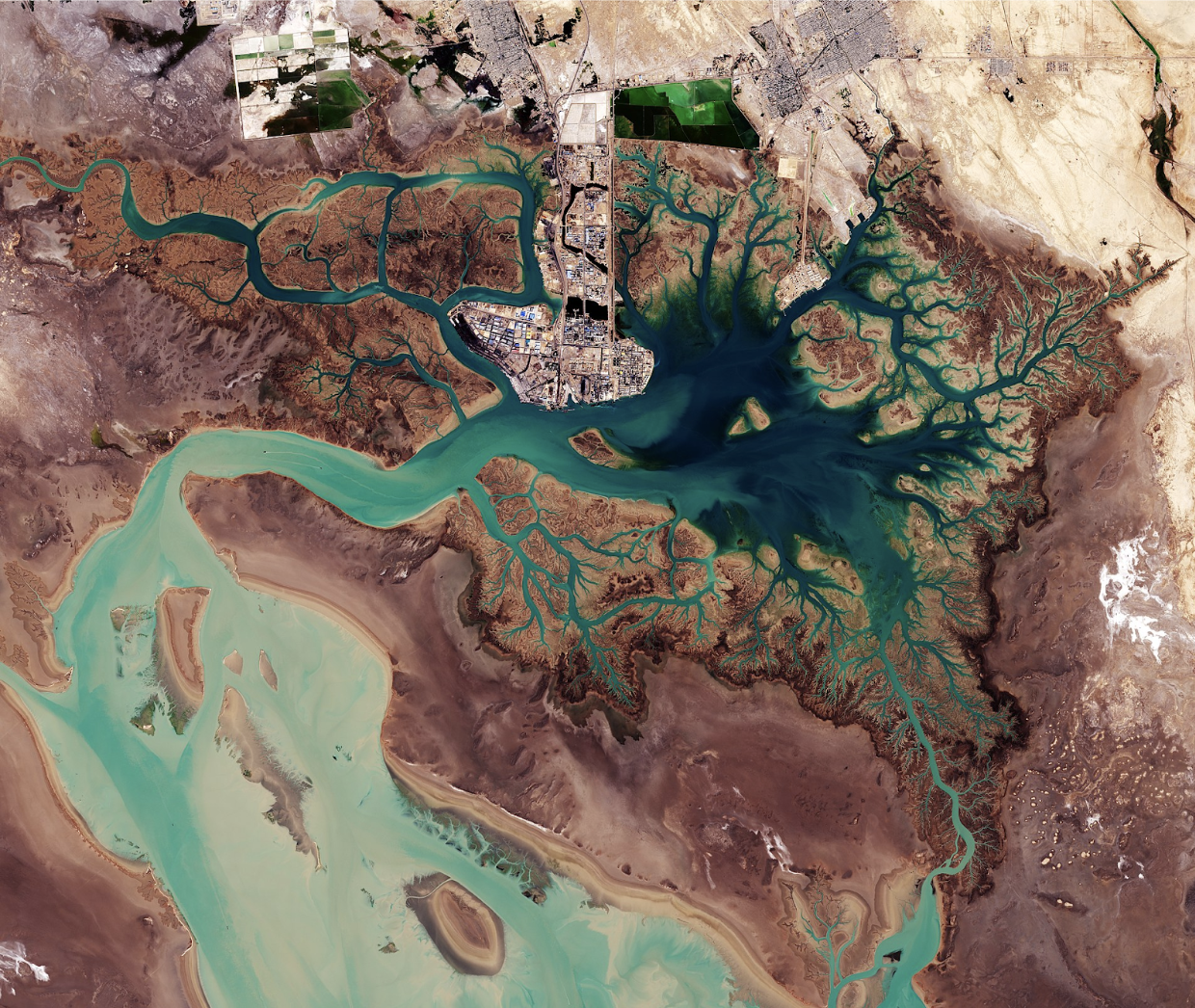
Image of Iran’s Musa Bay in February 2017. The area is considered an important ecological site. Iran continues to face a water crisis as of 2026 (European Space Agency).

Iran is not just running out of water; it is running out of time to admit that its own policies are turning a climate emergency into a national stability crisis. What makes Iran’s water disaster so alarming is not only the drought, extreme heat, and groundwater collapse that climate scientists have warned about for years, according to a report by Inside Climate News. It is the way the Iranian state has chosen to respond, doubling down on dam-building, over-extraction, and securitization instead of reform. That is not just mismanagement. It is a political choice, and it is pushing the country toward a slow-motion breakdown that the outside world, including policymakers in Washington, can no longer afford to treat as a side issue.
A regime that treats water like a weapon
In a 2025 article published by Forbes, Iran is one of the most water-stressed countries on Earth, with more than 80 percent of its territory classified as arid or semi-arid. That alone would be a serious challenge, but the real problem is that the state has treated water as something to be conquered and controlled, not managed and conserved.
For decades, Tehran has pursued an aggressive dam-building strategy, constructing hundreds of dams to divert rivers, expand irrigation, and feed industry. On paper, this looked like development. In practice, it has dried wetlands, starved downstream communities, and accelerated the collapse of river systems like the Zayandeh Rud in Isfahan and the Karun in Khuzestan.
According to data from the UN Development Programme, Iran’s groundwater extraction is unsustainable, with some aquifers so depleted they may never recover. Yet, the political system still rewards projects that promise quick gains—more water for politically connected farmers and more electricity for industry, even as the long-term costs mount. This "water mafia," as it is often called by environmentalists, consists of a powerful network of engineering firms and state-aligned contractors that profit from the construction of massive infrastructure regardless of its ecological toll.
Central to this network is the Islamic Revolutionary Guard Corps (IRGC), whose construction arm, Khatam al-Anbiya, dominates the country's water management projects. By securing no-bid contracts for dams and inter-basin transfers, the IRGC has effectively turned water management into a mechanism for shifting civilian funds into military coffers. The Iranian people are left to face the dry consequences of militarized construction.
The accelerant, not the spark
Climate change is undeniably making everything worse. Iran is warming faster than the global average, with heat waves becoming more frequent and dangerous. Dust storms that were once seasonal now batter cities year-round. The World Bank has flagged Iran as one of the countries most exposed to combined heat and water stress.
But climate change is not the original sin here. It is the accelerant poured onto a system already weakened by decades of over-pumping and politically driven water transfers. Agriculture uses roughly 90 percent of Iran’s water while contributing a much smaller share of GDP. Much of that water is lost through outdated flood irrigation and thirsty crops planted in the wrong places.
When wells run dry, farmers drill deeper into collapsing aquifers. When rivers shrink, authorities blame neighbors. When protests erupt, security forces are deployed faster than hydrologists. The dry riverbeds of Isfahan and the nearly dead Lake Urmia, which has lost more than 95 percent of its volume, are physical evidence of a political system that refuses to align its policies with reality.
The migration vote of no confidence
One of the most underappreciated consequences of this crisis is internal migration. As central provinces like Isfahan, Yazd and Kerman lose reliable water, people are moving in large numbers. This is not a theoretical trend; it is a mass displacement event happening in real time.
Northern provinces along the Caspian Sea, such as Mazandaran and Gilan, have become magnets for climate migrants. These regions still have relatively abundant rainfall, but they are now absorbing waves of people from the parched interior. This influx puts immense pressure on local housing, infrastructure, and social services, fueling resentment from long-time residents.
This is not just a demographic story; it is a political one. When citizens are forced to leave their homes because the state failed to protect basic environmental conditions, their movement becomes a silent, but powerful vote of no confidence in the central government. In provinces like Sistan and Baluchestan, the drying of the Hamoun wetlands has devastated livelihoods and intensified ethnic grievances, turning environmental neglect into a catalyst for regional instability.
Why this matters on the Hilltop
From Washington, it is tempting to see Iran primarily through the lenses of nuclear talks, sanctions and regional proxy conflicts. Climate rarely makes the top line of policy memos. That is a mistake.
A state that is losing control of its water is a state that is losing control of its future. Water stress is already shaping Iran’s internal politics, economic trajectory, and social cohesion. It is also creating new flashpoints at its borders, such as the ongoing water dispute with Afghanistan over the Helmand River. These tensions have already led to military skirmishes and fatalities, proving that "water wars" are no longer just the subject of academic speculation.
As we discuss the future of the Middle East in the classrooms of Georgetown, we must treat climate stress as a core driver, not a footnote. Iran can still choose to make things less catastrophic by modernizing irrigation, stopping the construction of illegal dams, and protecting remaining wetlands. But that requires the regime to admit that this crisis is not a Western plot.
It is the predictable outcome of its own decisions. Until that happens, every new dust storm and dried-up river is a reminder that the clock is ticking.