
Ebola on a Rampage in the DRC: What’s Causing the Humanitarian Crisis
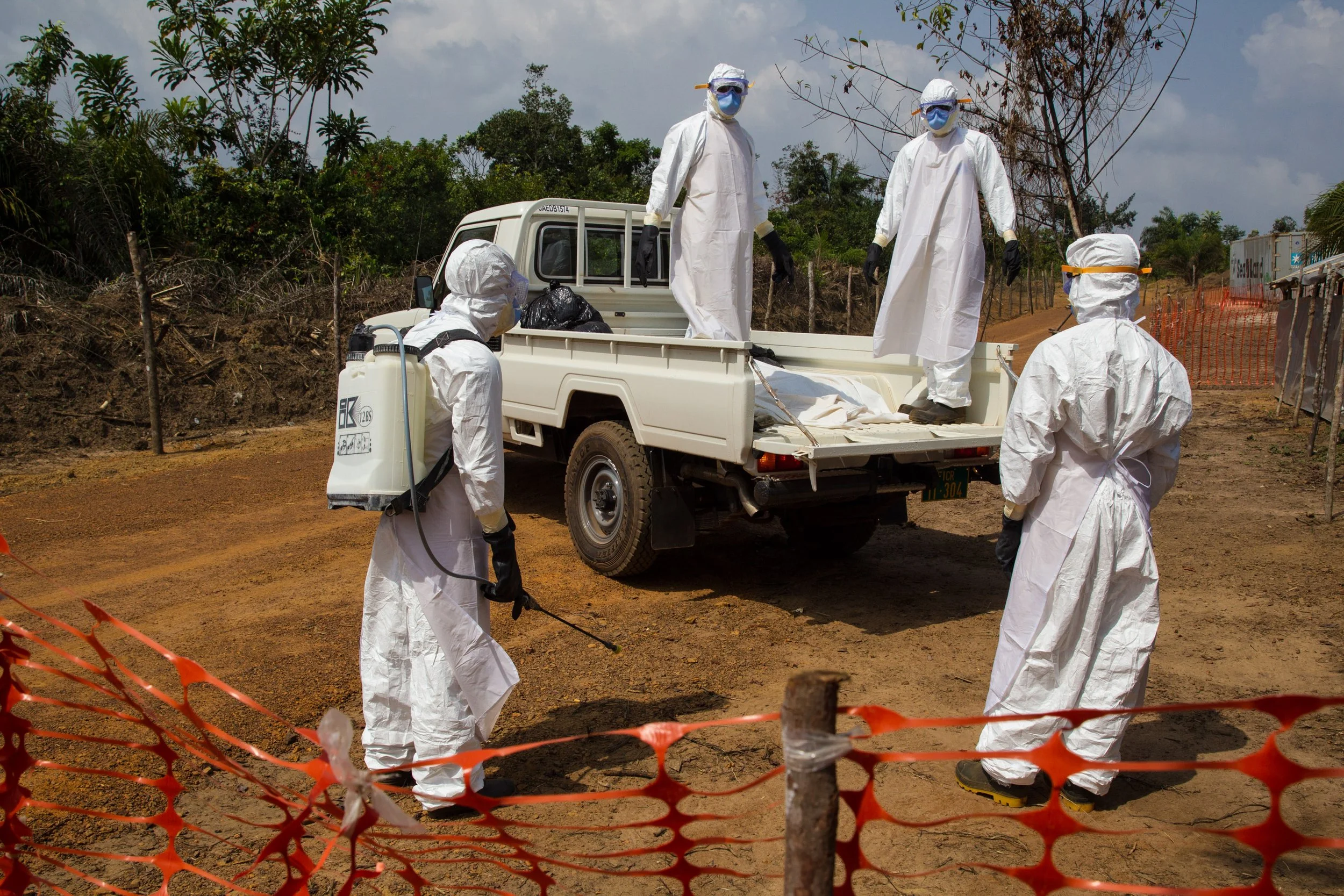
A team of doctors conducts a safe burial in Liberia during the 2014-2016 West Africa Ebola outbreak (Martine Perret).
The Democratic Republic of Congo (DRC) is battling its seventeenth Ebola outbreak, which public health experts are saying is the most severe since 2016.
DRC government officials confirmed the outbreak in May, although some analysts suspect that the virus had been circulating since January. Shortly after the DRC’s confirmation, the World Health Organization (WHO) declared a public health emergency of international concern—the highest alert level for public health threats. As of October 4th, the Ministry of Public Health reported 8,603 cases and 4,148 deaths across seven of the DRC’s 26 provinces.
The outbreak temporarily spread to the bordering country of Uganda, which reported 20 cases and two deaths. Separately, several American and French humanitarian workers working in the DRC have been infected. To curb the spread, the DRC has banned mass gatherings in the capital, Kinshasa, and in six provinces with confirmed cases. Simultaneously, the mayor of Goma, a city controlled by Rwandan-backed rebel group M23, has also forbidden gatherings.
The current outbreak is already the second-largest on record, following the West African Ebola outbreak of 2014-2016, when Ebola infected more than 28,000 people and killed more than 11,000, including 700 healthcare workers. In August, the WHO Director General predicted that at its current rate, the ongoing epidemic “is on track to eclipse the West African Ebola outbreak.”
While an advanced healthcare system could detect and isolate infected individuals before an epidemic of this size occurs, the DRC’s health infrastructure is strained by its sizable land area, sparse transportation in rural areas, and shortages of funding and staff. Doctors have also been on strike throughout the outbreak. As a result, the government has been unable to fully implement contact tracing. Ideally, the family and close friends of all new cases should be tracked and isolated to prevent further spread. However, a shortage of health personnel and infrastructure has meant that between over 20 percent of new cases are found outside of known contacts every day, suggesting that the virus is spreading faster than the government can track it.
In recent years, the DRC has seen a resurgence in violence, looting, and political instability as a result of M23 activities. The group has ousted local governments, such as in Goma, and its disruption of healthcare systems across North and South Kivu provinces has severely hampered the Ebola response. They have also displaced more than 6.9 million people across the country, 4.4 million of whom currently live in provinces with active Ebola transmission. Internally displaced people are especially vulnerable to Ebola because they live primarily in refugee camps, where cramped conditions and insufficient access to medical care fuel outbreaks. So far, officials have confirmed 88 Ebola cases and 56 deaths across refugee camps, including that of an eighteen-month-old girl, though these numbers are likely underestimates due to the challenges in contact tracing.
Outbreak response has been further challenged by the concurrent spread of fear and misinformation. Ebola mirrors common fevers at first, which delays hospital visits, and most patients die from severe dehydration if they don’t receive care in time. When family members try to care for their sick relatives or bury their dead, they come into contact with infected fluids and contract the virus as well. Healthcare workers have tried to bury Ebola patients safely, but doing so often requires detached interment in mass graves. This has caused significant unrest among grieving inhabitants of the DRC, and some have become distrustful of the government’s sincerity and skeptical of international aid efforts. Scared and distrusting Congolese have disrupted burial proceedings, fled treatment, and attacked healthcare workers in protest.
The WHO and various humanitarian organizations are supporting the DRC government to strengthen local public health response. The U.S. donated $500 million to support immediate assistance and clinics targeting the crisis, and China has contributed several medical teams to work alongside Congolese doctors. Meanwhile, trials are underway for several therapeutic treatments, including remdesivir, galidesivir, and MBP134, as well as two possible vaccine candidates. Existing treatments and vaccines work only for the Zaire strain of Ebola; the inability to detect the current strain, Bundibugyo, delayed recognition of the crisis for months.
Vaccines and treatments, as vital as they may be for today’s epidemic, are only band-aids for the broader issue. While severity varies, the DRC frequently suffers outbreaks, each with new challenges and dangers. Stopping Ebola doesn’t mean stopping this outbreak; it means stopping zoonotic spillover (the initial transmission of Ebola from bats to humans) in the first place. To do so, an emphasis must be placed on funding and strengthening the healthcare system against all diseases, not just those with epidemic potential. Stronger healthcare not only engenders trust among local populations but also creates the capacity to detect spillover, isolate cases, and curb the spread of a disease before it reaches epidemic level. Until then, Ebola outbreaks will persist, and thousands more lives will be needlessly lost.