
Ghana and Japan Deepen Bilateral Space Cooperation
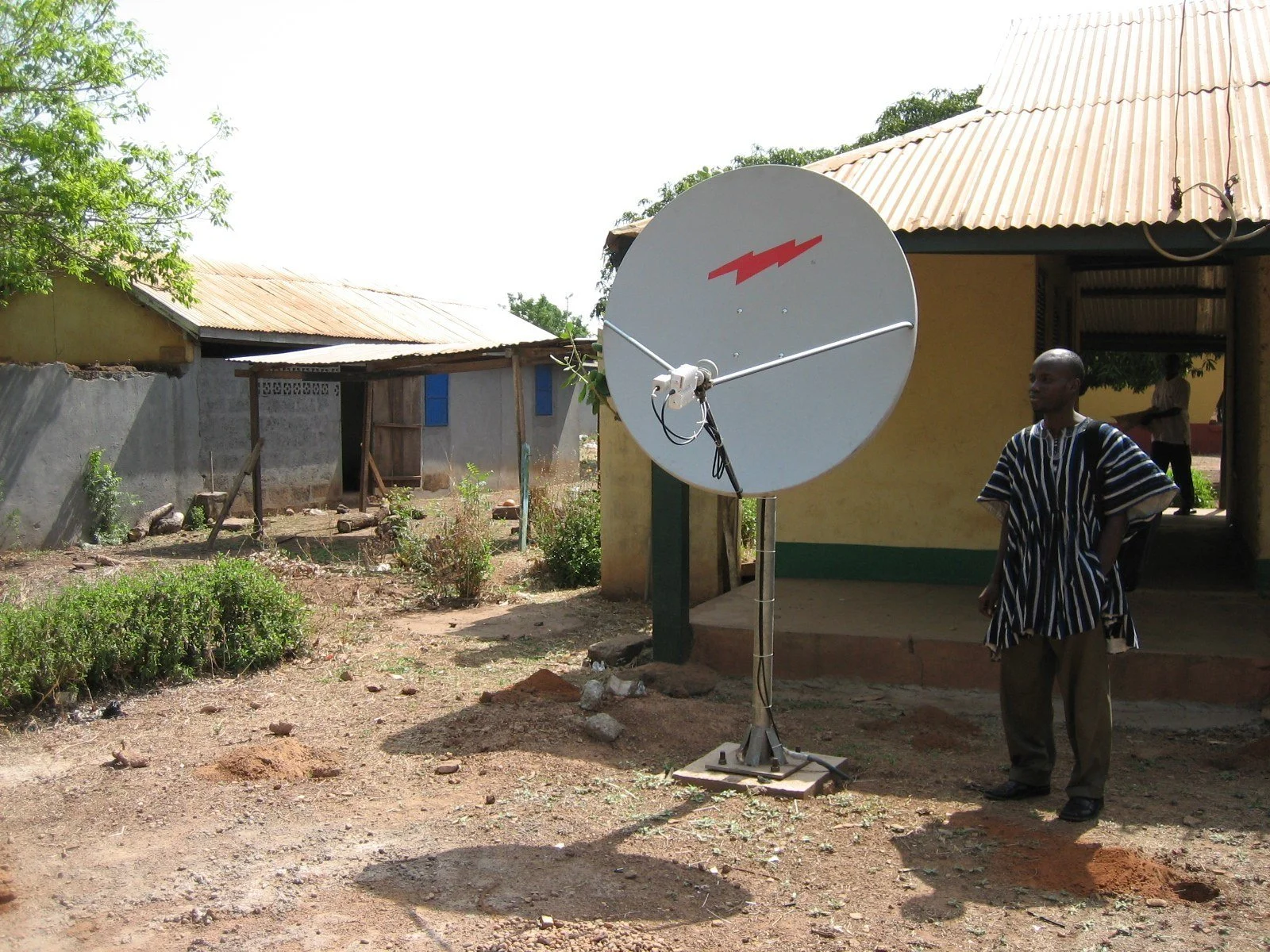
A satellite installed in Salaga, Ghana, to improve connectivity (IICD Photos).

Ghana officially announced on September 15 that it will establish its first space institution with Japan's aid as part of a two-year partnership between the countries aimed at co-developing space technology and research.
The partnership, which was signed last August at the Tokyo International Conference on African Development (TICAD), builds on more than a decade of scientific cooperation between Ghana and Japan. In 2017, three Ghanaian students developed GhanaSat-1, the country’s first satellite launched into space. This was made possible by funding from the Kyushu Institute of Technology’s BIRDS programs, which train students from countries without established space programs. Ghana was one of the countries involved in the first BIRDS project, alongside Mongolia, Nigeria, and Bangladesh. Now Ghanaian authorities are hoping to produce the country’s first astronaut with Japanese aid.
Japanese astronaut Koichi Wakata’s visit to Ghana this month demonstrated what that aid could look like. Wakata, who has flown five space missions and spent 504 days in space, met with Ghanaian researchers and students to discuss cooperation between the two countries. He argued that Ghana’s future in space depends on developing local capacity in satellite production, operation, and use. He therefore suggested sending student experiments to the International Space Station to build domestic interest and skills in space science.
Japan’s ambassador to Ghana, Hiroshi Yoshimoto, said Wakata’s visit created a foundation for further cooperation between Ghana and Japan in scientific and technological development. Dr. Joseph Tandoh, Director of the Ghana Space Science and Technology Institute, agreed, asserting that Ghana wants to move beyond being a consumer of space technology: “We want to partake, and we want to position ourselves in a way that we will contribute to the space economy.” In April, GGSTI held a stakeholder meeting with Cross U, a Tokyo-based space organization, to address how Japanese space technologies could help Ghana achieve its sustainability goals. Cross U Secretary General Masafuni Yonazu affirmed that his organization was eager to identify opportunities for joint projects and capacity building.
Ghana’s Foreign Affairs Minister Samuel Okudzeto Ablakwa cautions that Ghana is still taking its “baby steps” in building a national space program, despite Japan’s support. Ghana has not yet put the domestic legal framework for its space sector fully in place, but even there it is enlisting support from more experienced partners. The country began work on national space legislation last year with support from France and the United Nations Office for Outer Space Affairs. Ghana may be taking its first steps into the space sector, but it is doing so with guidance from nations that have already made the journey.