
Reviewing the Xi-Trump Meeting
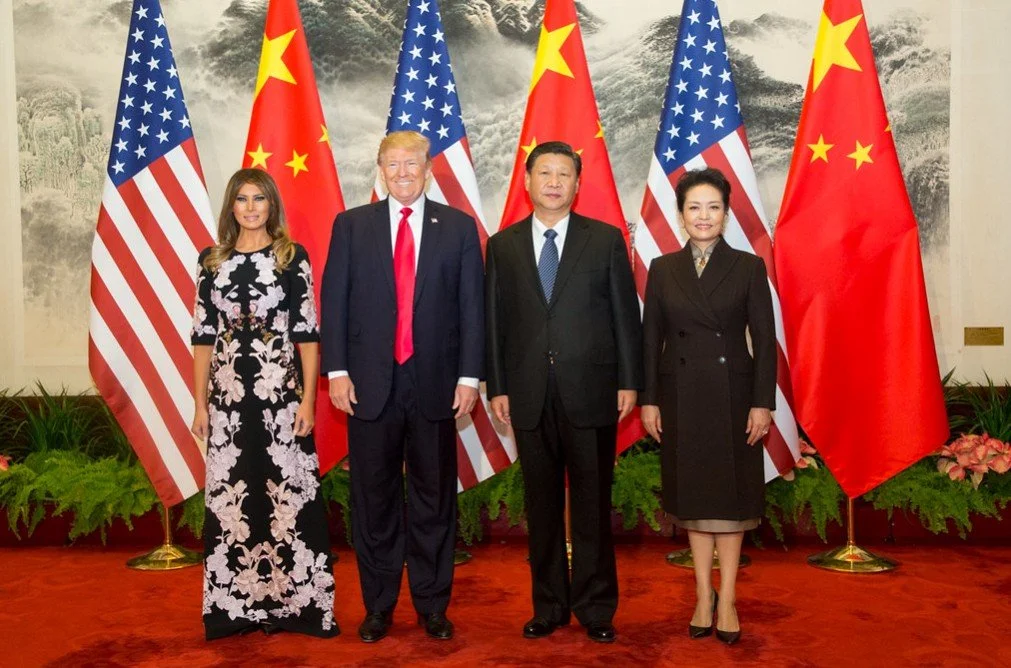
October 30, 2025 marked a historic day in international relations, when Chinese president Xi Jinping and U.S. president Donald Trump met in Busan, South Korea. This marks the two leaders’ first meeting since 2019 during Trump’s first term.
The primary topics of discussion during these two meetings were economic and trade policy. These conversations come after a year of escalating tariffs from both sides, which recently culminated in the threat of 100% tariffs on China in response to the country’s monopolization of rare earth minerals. The U.S. has also implemented other trade sanctions, such as export controls, port fees, and visa restrictions.
To some, the meeting has resulted in a “momentary de-escalation” between the two nations. China agreed to continue its purchase of U.S. agricultural products and a one-year pause on earlier restrictions on the export of rare earth and critical minerals. Trump stated his interest to annually renew the agreement.
“I think the deal will go on for a long time, long beyond the year,” stated Trump. “But all of the rare earth has been settled, and that’s for the world.”
China’s position as a U.S. adversary, as well as its control over the vast majority of the world’s rare earth mineral supply chains, poses a threat to the U.S. as rare earth minerals are a key military resource. If Trump’s statement is true, it implies that U.S.-China relations are stable enough that the former’s reliance on the latter is not an issue.
Controversially, President Trump agreed to cut U.S. tariffs on fentanyl and its precursor chemicals by 10%, reducing the overall U.S. tariff rate on China from 57% to 47%. As a counterbalance, Xi indicated China's intent to assist the U.S. in preventing the inflow of these materials.
But all that glitters is not gold. The meeting came almost immediately after Trump publicly announced the U.S. would resume nuclear weapons testing for the first time in over thirty years, hoping to match Russian and Chinese displays.
Some issues were left open. No finalized agreements were made on the sale of TikTok, a Chinese-owned company with over 130 million U.S.-based users.
Notably, the issue of Taiwan was “not discussed” according to Trump. More recently, on November 24, 2025, the two world leaders spoke on the phone; both highlighted the conversation as “constructive” and attributed its success to the in-person meeting in Busan. During this call, Xi was said to reiterate China’s position on Taiwan— namely, a position that does not recognize Taiwanese independence. Amidst U.S. concerns about a 2026 war between China and Taiwan, this development should be closely followed.
Thus far, both China and the U.S. have maintained their commitments to loosen trade restrictions and have established plans to continue this process into 2026.