
Global Pushback Against Gender and LGBTQ+ Rights Rises
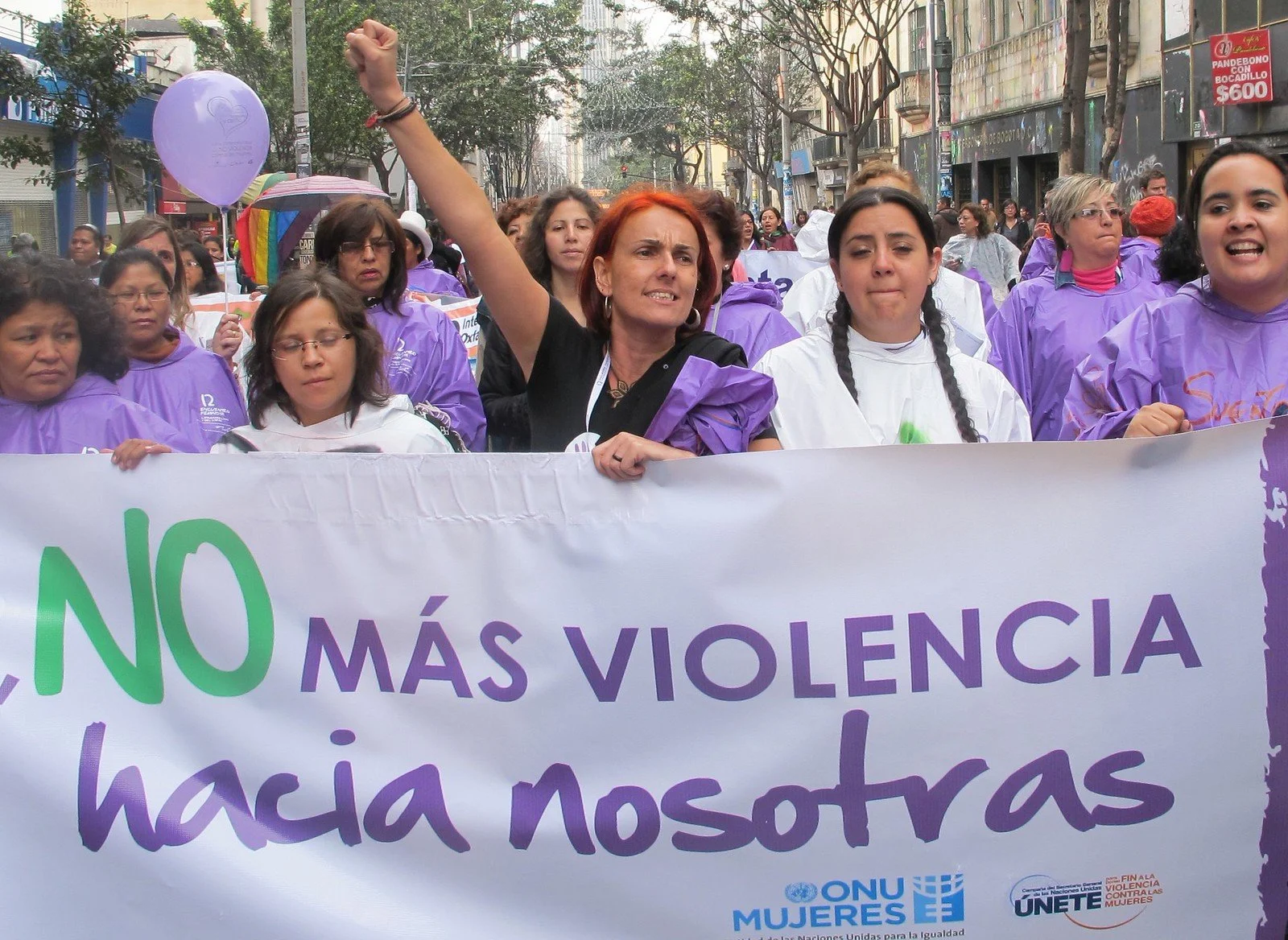
Women of Latin America and the Caribbean take to the Streets of Bogota (Flickr)
As conservative activists lobby against gender equality and LGBTQ+ initiatives at the local level, governments around the world are advancing even broader restrictions. The United States, Argentina, and Poland are among the many countries seeing renewed pushback against minority rights.
Analysts at the Carnegie Endowment describe the trend as an "anti-gender backlash" that has occurred primarily in countries that prioritize right-wing, conservative ideologies. In Hungary, for instance, the government has attempted to ban the annual Budapest Pride event. At the same time, in Argentina, President Javier Milei has drawn criticism for recent attempts to decriminalize femicide, linking it to radical feminism. Advocates warn that efforts to halt progressive legislation leave women and LGBTQ+ populations increasingly vulnerable.
While these attempts could be perceived as independent nations’ responses to gender relations within their own country, the 2020 UN Human Rights report reported that governments, religious groups, and civil society groups are coordinating transnationally to promote similarly restrictive policies. While, according to the Chatham House, many countries have restricted advocacy and support groups, others, like Uganda, have fully criminalized same-sex activity while creating barriers to make it extremely difficult for their citizens to seek international support.
The United States has been at the center of this surge to restrict LGBTQ+ rights. The Trump administration has seen some of the strongest pushbacks, including the appointment of advisors with anti-LGBTQ+ records, and proposals to cut funding from life-saving resources, such as the 988 Suicide & Crisis Lifeline’s LGBTQ+ Youth Specialized Services hotline, the Human Rights Research Center states.
Despite these efforts, there has been significant activism and counter legislation to support the LGBTQ+ community. According to the Human Rights Research Center, several Democratic state attorneys general (AGs) formed a coalition to provide gender-affirming care for youth, despite Trump’s executive order against it. And large corporations, such as McDonald's and Walmart, have moved to create more inclusive workplaces by eliminating policies that disadvantaged LGBTQ+ employees, per NBC. The Human Rights Campaign Program stated that the 2025 Equality Index showed that 765 of the 1,449 evaluated companies received a perfect score, evidence, advocates say, that more inclusive policies can strengthen employee protection.
As attack politics become increasingly frequent in countries worldwide, the issue of gender has become another policy area in which the tug-of-war of partisan politics manifests. Polarization encourages the left and the right to oppose each other on all fronts, and the issue of gender is no different. For instance, as forces like the U.S. Democratic Party and its state AGs move to protect gender-affirming care, the opposing Republican Party must therefore attempt to curtail it. Unfortunately, groups like the LGBTQ+ and women are caught in the middle of the political crossfire as many see their protections disappear. The continued success of conservative movements around the world makes this trend unlikely to recede any time soon.