
Kazakhstan deepens relationships with the US and Israel while maintaining close Russian ties
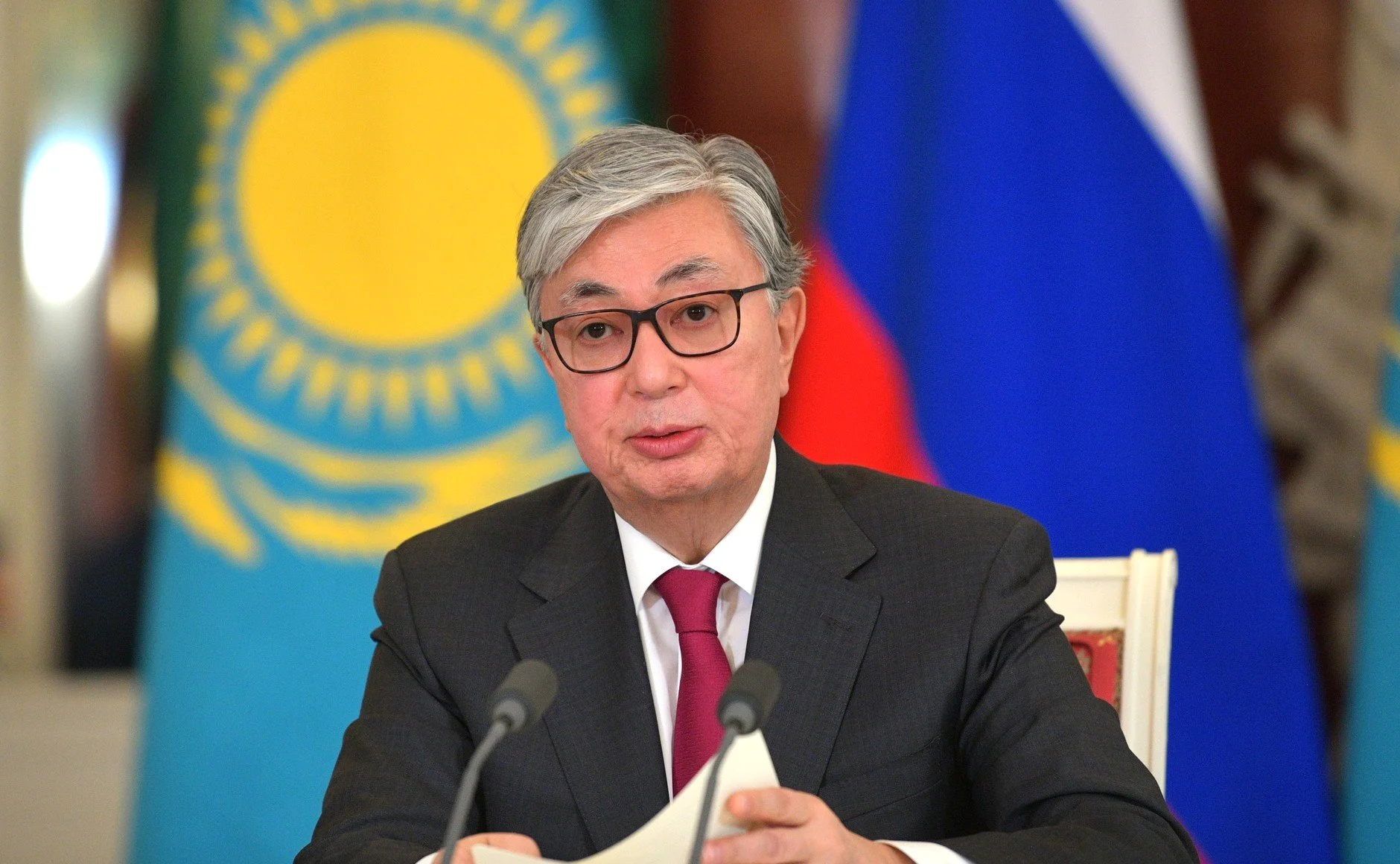
Kazakh President Tokayev has avoided aligning fully with either the United States or Russia (Wikimedia Commons).

Kazakhstan announced its decision to join the Abraham Accords, positioning itself as the first Central Asian state to join the U.S.-brokered normalization framework with Israel on November 6, 2025, according to The Hill.
According to the Foundation for the Defense of Democracies (FDD), Kazakhstan’s President Kassym-Jomart Tokayev told US officials ahead of a November summit between Central Asian countries and the United States that he wanted to “upgrade” ties with Israel by joining the accords. Kazakhstan’s impending membership builds on a long-standing relationship with Israel. The two countries have maintained warm diplomatic relations since 1992, and Kazakhstan supplies roughly a quarter of Israel’s oil imports, according to Al Jazeera.
President Tokayev’s decision comes alongside new U.S.-Kazakh economic cooperation. During the November summit, Washington and Astana signed a memorandum of understanding on critical minerals, and the U.S. State Department announced commercial deals totaling billions of dollars, including Kazakh purchases of Boeing aircraft and rail equipment, according to the U.S. Embassy in Astana. Kazakhstan also contributed to the Kennedy Center, and the two countries agreed on partnerships worth up to $3.7 billion between Kazakhstan’s Ministry of Artificial Intelligence and Digital Development and U.S. technology companies, including NVIDIA, Oracle, and Starlink.
After his recent trip to the United States, President Tokayev continued to balance Kazakhstan’s longstanding relationship with Russia and its increasing connection with the United States by visiting Moscow. Days after the United States-Central Asia summit, he met with Russian President Vladimir Putin on November 11, 2025, according to Radio Free Europe. President Tokayev and President Putin held formal talks focused on joint gas projects and the impact of U.S. sanctions on Russian oil companies. The two leaders agreed to strengthen their partnership in oil, coal, and electricity, and discussed supplying Russian gas to northern Kazakhstan and the challenges of transiting gas to third countries.
Taken together, the renewed energy cooperation with Russia, the move to join the Abraham Accords, and the deepening economic cooperation with the United States highlight Kazakhstan’s multi-pronged foreign policy, seeking to expand strategic options and agency without fully aligning with any side.