
UN Struggles to Fund Rohingya Relief Efforts
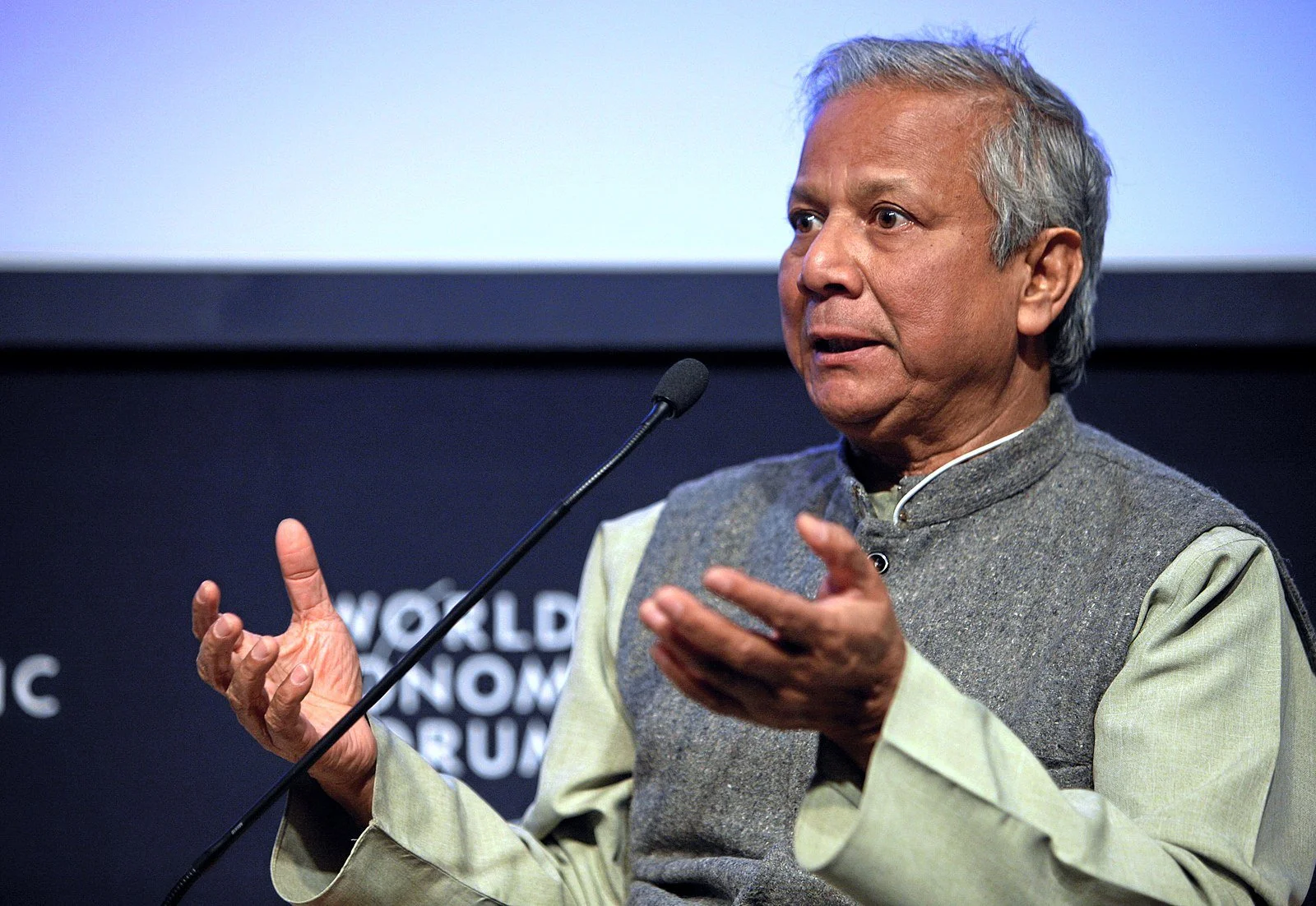
Muhammad Yunus, current Chief Advisor of Bangladesh, is pictured at a 2009 summit. The interim leader, who has helmed the country’s transitional government since August 2024, called attention to the Rohingya refugee crisis at a UN meeting. (Wikimedia Commons)

Members of the United Nations convened to discuss the ongoing Rohingya refugee crisis on September 30. Although the UN agreed that stronger support is necessary to end the emergency, progress and funding have been slow.
Designated by the UN as the “world’s largest stateless population,” the Rohingya are a Muslim minority originating from Myanmar’s state of Rakhine. Since its beginning in 2021, Myanmar’s civil war has displaced hundreds of thousands of Rohingya from their ancestral homeland in Rakhine. These tensions have become deeply ingrained within Burmese society—especially due to the impact of Islamophobia, victimization narratives, and growing Buddhist nationalism. As a result of these conflicts, the Rohingya have become victims of widespread religious persecution.
In 2017, Myanmar’s military, which later deposed the democratic government in a 2021 coup, massacred Rohingya civilians while pursuing the insurgent Arakan Rohingya Salvation Army. Studies on the conflict revealed numerous human rights violations: sexual assault was employed as a military strategy, soldiers executed Rohingya community leaders, and over 300 Rohingya villages were burnt down. Over 740,000 Rohingya were displaced in the wake of the violence, more than half of them children.
Myanmar has also directly ostracized the Rohingya through its legal system. Members of the minority are not recognized as Burmese citizens, despite tracing their heritage back several centuries. The Rohingya have also been excluded from Myanmar’s list of officially recognized ethnic groups. Moreover, intermarriage and religious practices are directly regulated and repressed under Burmese law. These pieces of legislation highlight that Rohingya discrimination has become institutionalized; despite condemnation from international authorities, the government continues to be complicit in suppressing Rohingya voices.
The UN’s recent discussion about the Rohingya is a response to the ongoing civil war. Trapped between hostile military factions, the remaining Rohingya in Myanmar have been threatened with forced labor, arson attacks, and mass genocide. Today, the UN Refugee Agency estimates that around 1.3 million Rohingya have fled Myanmar, particularly to the Bangladeshi city of Cox’s Bazar. This sudden influx of immigrants has caused significant overcrowding and curtailed Rohingya access to healthcare and housing.
Bangladesh’s current administration has become very vocal about the crisis: at the conference, Bangladesh’s Chief Adviser Muhammad Yunus proposed a seven-point solution to repatriating the Rohingya back to Myanmar. Key objectives included an end to the refugee camps’ “narco-economy,” and a stabilization of the Rakhine state. Other countries, including Japan, Thailand, Malaysia, and Turkey, expressed their support for the Rohingya and condemned Myanmar for its inaction. The US also contributed $60 million to support Bangladesh’s relief efforts directly.
While these projects are significant steps in rallying attention to the crisis, the Rohingya’s future remains uncertain. Rohingya survival is heavily reliant on foreign aid: around 95 percent of Rohingya households in Bangladesh are supported by humanitarian assistance. Meanwhile, the UN’s 2025 Humanitarian Needs and Response Plan for Myanmar has only met 12 percent of its financial goals. Moreover, Bangladesh has tried to disincentivize immigration by banning refugees from employment, education, and visas. These trends have stagnated positive change, leaving the Rohingya nationless and isolated. As negotiations continue, countries must recognize that all parties are responsible for putting an end to the crisis.