
Malawi President Initiates Sexual Violence Task Force
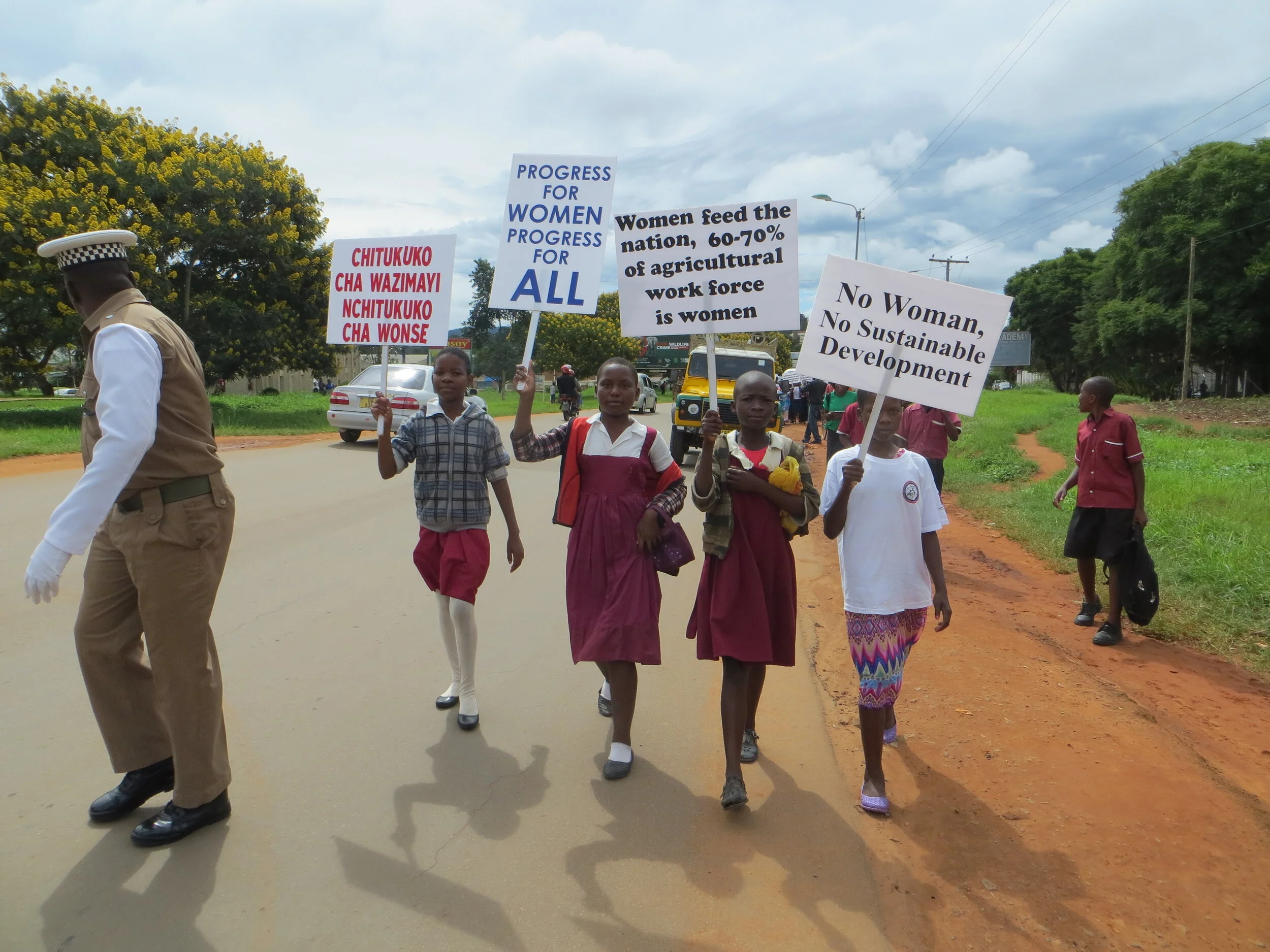
Malawi schoolgirls walk in solidarity with women on International Women’s Day in 2016. The number of protests for women’s rights, specifically those regarding justice after sexual assault, has increased in recent years due to escalating conditions. [Creative Commons]
Malawian President Lazarus Chakwera ordered the creation of a governmental task force dedicated to combatting the country’s pervasive sexual violence on November 9. Chakwera condemned sexual violence in a national radio address, saying, “It is disturbing to note that across the country, children are being defiled and the numbers keep escalating.”
Although no plans or policy changes have come to pass, Chakwera says the task force will include ministries, traditional leaders, and leaders in education at all levels.
Sexual violence, especially against adolescent girls, has in recent years become a serious issue in Malawi. The 2013 Violence Against Children and Young People in Malawi survey (VACS) reveals that more than 60 percent of all Malawians experienced sexual violence during their childhood. UNICEF reports that between April and June 2020, 77 percent of sexual abuse cases in the country targeted children.
Researchers also warn of the potential for increased rates of sexual violence during periods of economic hardship, such as during the COVID-19 pandemic. VACS also reports that throughout the last several decades, Malawi “consistently had some of the poorest development indicators, including poverty, food insecurity, and HIV prevalence, in sub-Saharan Africa, circumstances which have the potential to increase the vulnerability of all children and young women.”
According to UN Women, “As the COVID-19 pandemic continues, this number is likely to grow with multiple impacts on women’s wellbeing, their sexual and reproductive health, their mental health, and their ability to participate and lead in the recovery of our societies and economy.”
Last week, the city of Mzuzu in Northern Malawi registered four cases of “defilement,” a term not explicitly defined. One of these cases involved a 10-year-old girl who had experienced “defilement” on her way home from school, leaving her in critical condition. She has since had to undergo two procedures.
One of the first actions promised by Chakwera involved establishing harsher penalties for perpetrators of sexual violence. Malawi’s penal code states that any person who “unlawfully and indecently assaults any woman or girl shall be liable to imprisonment for fourteen years.” However, Grace Mtawali of Women Lawyers states that these current laws do not effectively deter would-be assailants and that “14 years maximum sentence for defilers is manifestly inadequate.”
The Social Institutions and Gender Index for Malawi in 2019 also notes that the penal codes for sexual violence have inexplicit and exclusionary qualities. For instance, according to Malawi laws, boys and men cannot be victims of rape, while no defnition of rape within a marriage stands on the books.
However, some change has happened in recent years. The Domestic Violence Act was passed in 2006, followed by the Child Care, Protection, and Justice Act in 2010. These pieces of legislation made illegal any abuse that harms the health or general development of a child. However, due to the stigma associated with sexual violence and its prevalence in modern Malawi, many assaults go unreported.