
Egypt, Ethiopia Disagree Over Proposed Dam
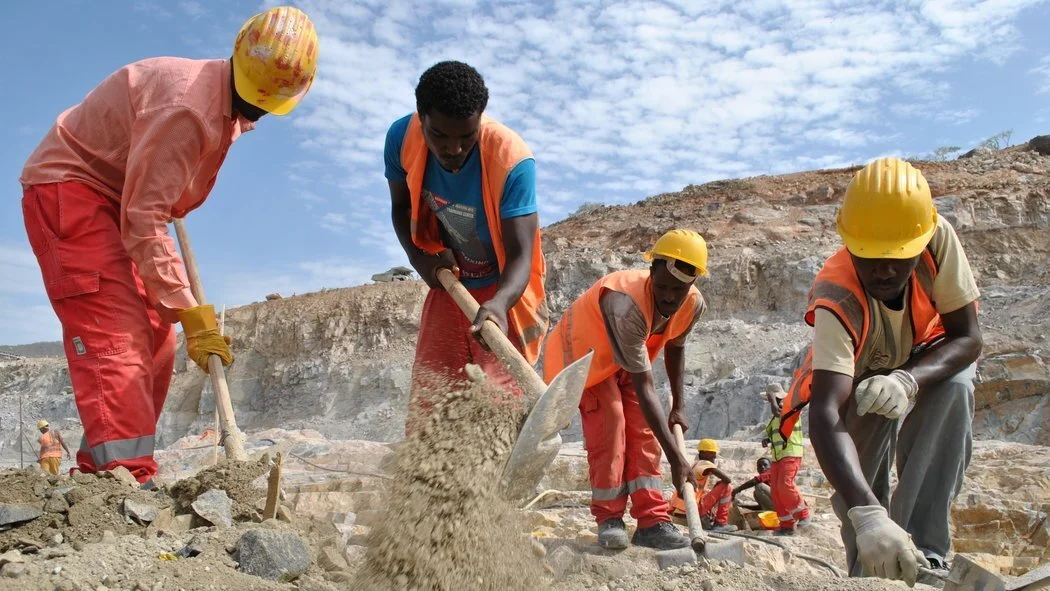
Ethiopian workers begin construction on the Nile dam in 2014. (Wikimedia Commons)
Egypt and Ethiopia announced disagreement over technical aspects of the proposed Grand Ethiopian Renaissance Dam (GERD) after talks held on September 15. Irrigation ministers from Sudan, Egypt, and Ethiopia met in Cairo to discuss details regarding water level and operational procedure of the dam. Egypt rejected Ethiopia’s plan to fill the dam in three years due to concerns over the dam’s effect on water levels in the Nile River.
The Ethiopian government announced the dam project in 2011 as reported by Deutsche Welle. The project is located on the Blue Nile in Ethiopia, a tributary of the Nile River. Reuters reports that the dam is expected to generate 6000 megawatts of electricity, roughly equal to ten coal plants. The dam became an immediate source of conflict between Egypt and Ethiopia.
The scientific journal Nature notes that the management of scarce water supplies has already presented challenges across Africa. Resolution of the conflict between Egypt and Ethiopia could provide a helpful template as the region struggles with the effects of climate change.
On one hand, Ethiopia sees the proposed dam as a path to economic revitalization because it would make the nation Africa’s top energy exporter. However, Egypt sees the dam as a threat to scarce water supplies because dams reduce the water flow of a river by creating a reservoir. As Al Jazeera noted, the Nile accounts for 90 percent of Egypt’s freshwater supply, so any reduction in water flow may have significant impacts.
The disagreements that stalled the September 15 talks involve technical details about the dam’s operation. A report by Egypt Independent explains that Egypt advocated for “limiting the filling years of the reservoir from seven to ten years.” In other words, Egypt wants Ethiopia to fill the dam’s reservoir slowly so that the decline in water flow per year is manageable. Egypt believes that this “will mitigate the impact of the dam on Egypt and Sudan’s water share of the Nile.” Ethiopia’s proposal, however, calls for a three-year filling period, which will have a more significant and immediate effect on water flow.
Ethiopia and Egypt also disagree over the optimal amount of water to be released from the dam. A report by the Addis Standard highlights Ethiopia’s refusal of Egypt’s request for a “minimum guaranteed release of 40 billion meter cubic (BMC) of water [per year.]” Egypt wants a guarantee that Ethiopia’s dam will not reduce the Nile’s water flow to below-average levels. Ethiopia refused to give this promise because it believes the request is unfair and unrealistic. Ethiopian officials propose that the minimum guaranteed release should be closer to 35 BMC. For comparison, it would take two million Olympic swimming pools to equal the disputed five BMC per year.
The intensification of rhetoric on both sides suggests that the conflict will be difficult to resolve. A report by Al-Monitor details the Egyptian Foreign Ministry’s response to Ethiopia’s proposal, claiming that Ethiopia has displayed “an insistence to impose a unilateral vision while disregarding the interests of others’ interests [sic] and without giving due diligence to avoiding damages to two estuary countries, especially Egypt.”
Likewise, the Washington Post reported that Ethiopia viewed Egyptian proposals as “against the sovereignty of Ethiopia.” Because both parties have conflicting interests with respect to the Nile, reconciling those differences will likely require difficult compromise.
As a part of the effort to negotiate details of the GERD’s operation, further talks are planned over the course of the next few weeks. AllAfrica reports that an independent scientific group will hold an additional discussion in the Sudanese capital of Khartoum from September 30 to October 1. Afterward, the ministers of Egypt, Sudan, and Ethiopia will meet again from October 4 to 5 to resolve technical disagreements. Reaching an agreement is crucial to promoting stability in an increasingly dry East Africa.