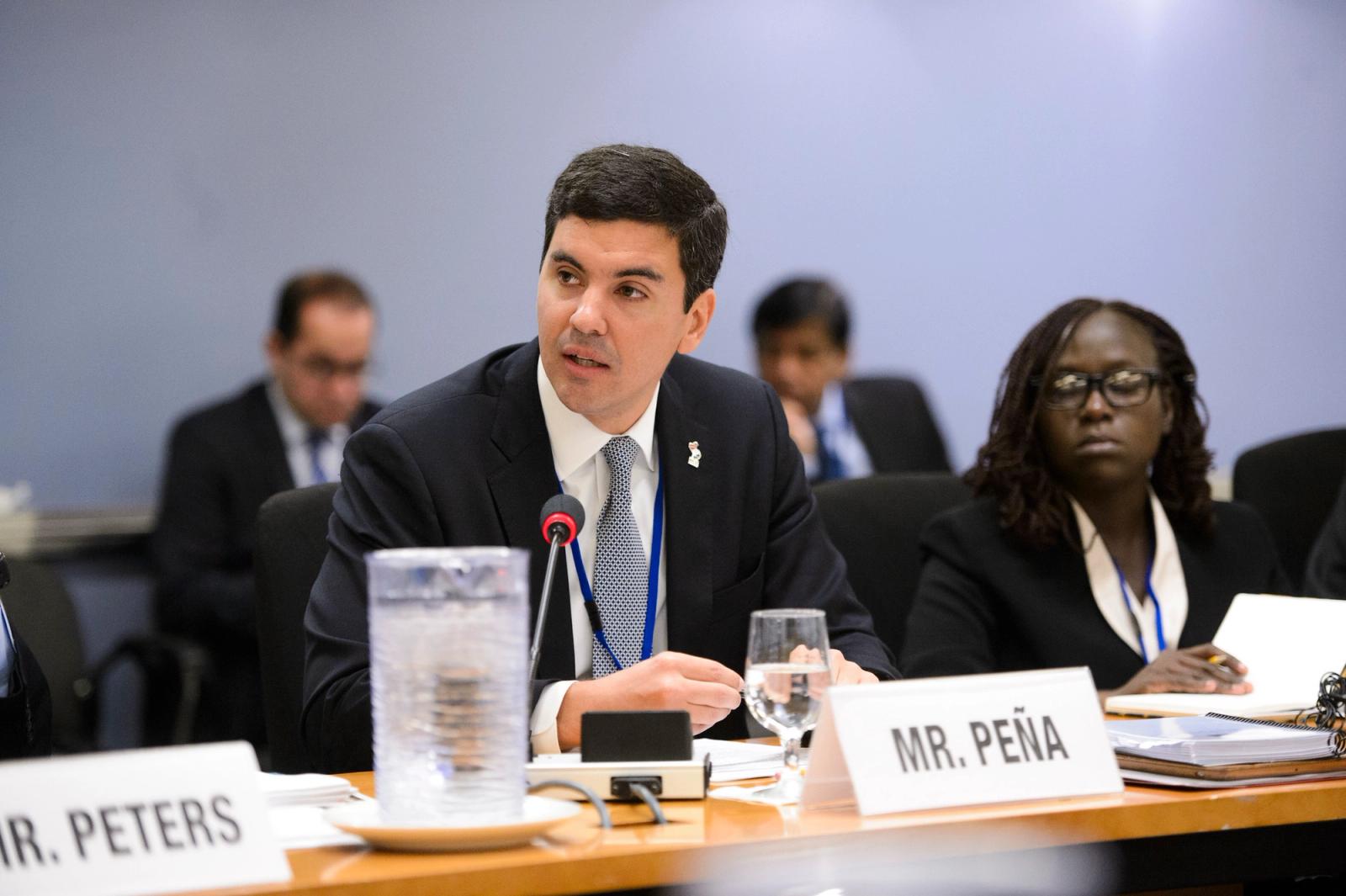
Paraguay’s Senate removed President Santiago Peña from office on November 6 over misconduct tied to the collapse of Ueno Bank. Prosecutors ordered him to remain at one of his homes in Asunción until he is summoned for trial, according to CBS News. Per Credendo, Peña was replaced by Vice President Pedro Alliana.
Regulators seized Ueno Bank three days before the vote and have begun the process of dissolving it, per CBS News. The bank, considered the country’s largest bank by number of customers, was reported by NPR to have 2.9 million customers, which amounts to about 60 percent of Paraguay’s adults. According to Credendo, the central bank found that Ueno’s solvency ratio had fallen below half the required minimum, and that it had made irregular loans to companies linked to its own parent company. CBS News also reports that customers could no longer withdraw cash after the seizure.
Prosecutors accuse Peña of using his political influence to direct hundreds of millions of dollars in public funds to Ueno while regulators ignored risky lending. They charged him with breach of trust, influence peddling and using public office for personal gain, which carry up to 10 years in prison. Peña denied the accusations.
According to Barron’s, Peña owned shares in Ueno’s parent company until 2025. Two years prior, in 2023, he had appointed Carlos Carvallo, a former chairman of Ueno’s predecessor firm, to lead the central bank; that firm received its banking license less than three months later. According to Credendo, public institutions also increased their deposits at Ueno during his term. The bank held more than $800 million in public funds, and investigators searched the president’s residence and private home. Prosecutors have asked other countries to help trace missing money.
Protesters gathered outside Congress in Asuncion over the frozen accounts. By Saturday, nearly 1.2 million customers had received advance payments from the state deposit guarantee fund, while others were still waiting, per NPR. CBS News reports that Paraguayan bonds posted some of the worst losses in emerging markets.
Credendo reports that Alliana is expected to serve until the presidential term ends in August 2028. According to a statement released by the U.S. State Department, U.S. Secretary of State Marco Rubio called him to reaffirm the U.S. partnership with Paraguay. Taiwan’s foreign ministry said the change in government does not affect its cooperation with Paraguay, which recognizes Taiwan rather than Beijing, per Reuters.
The case ties a bank failure directly to the head of government in a U.S. ally that sits between Brazil and Argentina. For Georgetown students who study finance, regional politics or U.S. policy in Latin America, it shows how one lender’s supervision can become a test of a country’s institutions. Prosecutors have not yet said whether they will recover the public money, and that answer will shape how Paraguayans and foreign investors judge the new government.