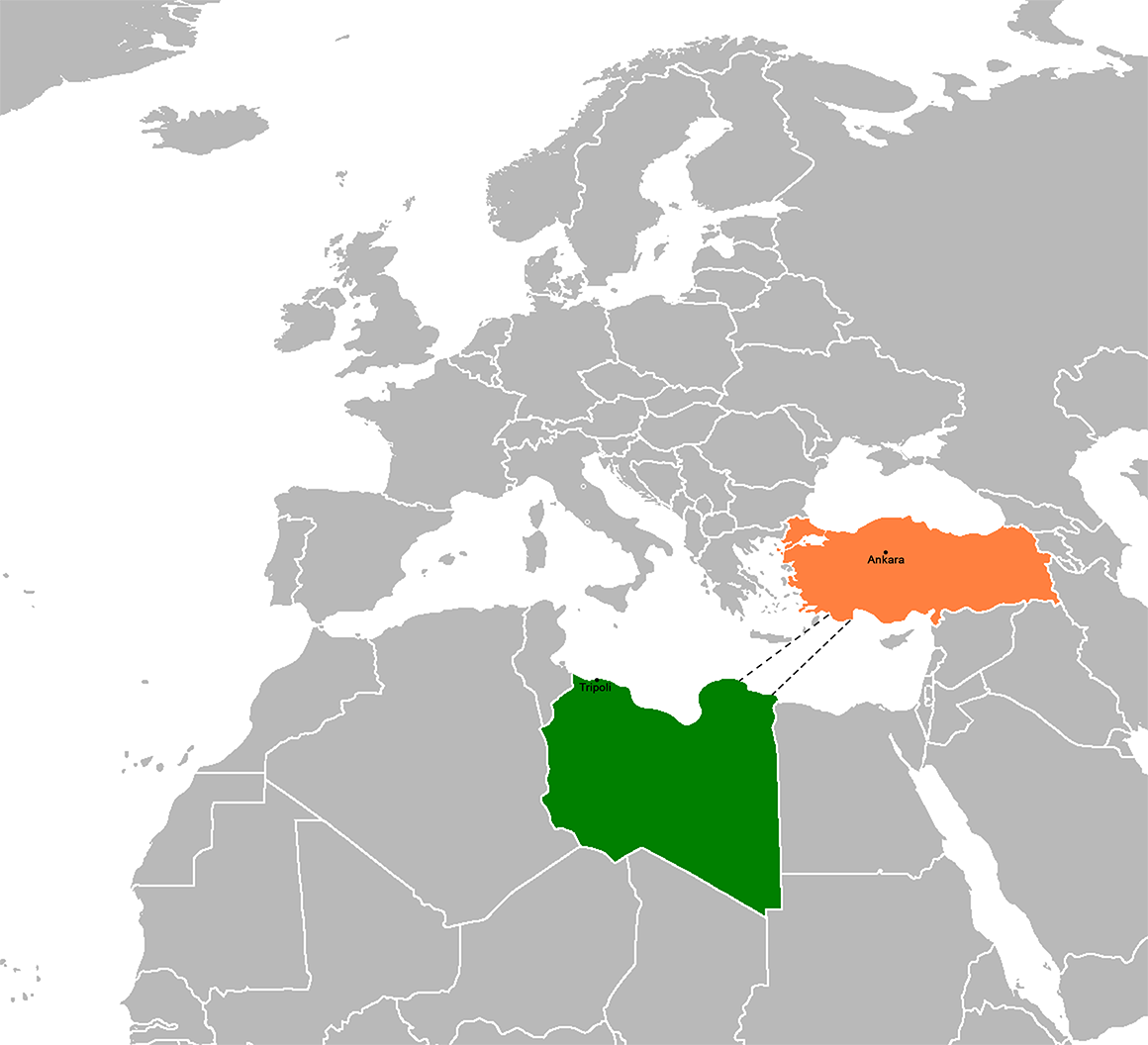
The eastern Libyan parliament approved a long-contested maritime border agreement with Türkiye on October 20, according to Reuters. This agreement on maritime delimitation represents a shift in the previously contentious relationship between Türkiye and the Tripoli-opposed eastern Libyan government. According to Al-Monitor, the agreement was previously adopted by the capital-based and UN-recognized government in 2019, which has been the source of Turkish support since the 2014 Libyan Civil War. This approval signifies a shift in Turkish influence in Libya. Türkiye has inched closer to gaining eastern Libyan support, mainly that of Libyan National Army leader Saddam Haftar.
As reported by Al Jazeera, previously, Türkiye had backed Tripoli’s government against Haftar’s attacks on the capital, most recently in 2020. However, since the turn of the decade, leaders from Ankara have been developing strategic ties with the eastern government to build stronger national support in Libya and secure economic ties and goals. This includes a military agreement creating Turkish cooperation and influence in eastern Libya, made in July. According to Al Monitor, some have cited Saddam Haftar’s personal political ambitions as the reason for sparking this new connection with Türkiye. Specifically, Haftar sees Türkiye as having great potential in backing him as a candidate for president.
Looking beyond Libya and Türkiye, this agreement also holds implications for many countries in the region. First, according to Al Jazeera, many nations in the region opposed the delimitation agreement as a violation of international agreements, namely Greece, Egypt, Cyprus, Israel, and the EU more broadly. The standing of the borders infringes on waters claimed by Greece, Egypt, and Cyprus. Greece and Egypt also hold a maritime trade and border agreement, which Türkiye opposes, according to Reuters. Türkiye’s claims and growing presence in eastern Egypt’s borderlands, combined with its historical rivalry with Greece and Cyprus, represent a potential concern for Egypt, as reported by Al Jazeera. Some see it as an encroachment on the historical political, cultural, and geographic ties between Egypt and Libya; however, the impact remains unclear, as Ankara and Cairo are friendly strategic partners.