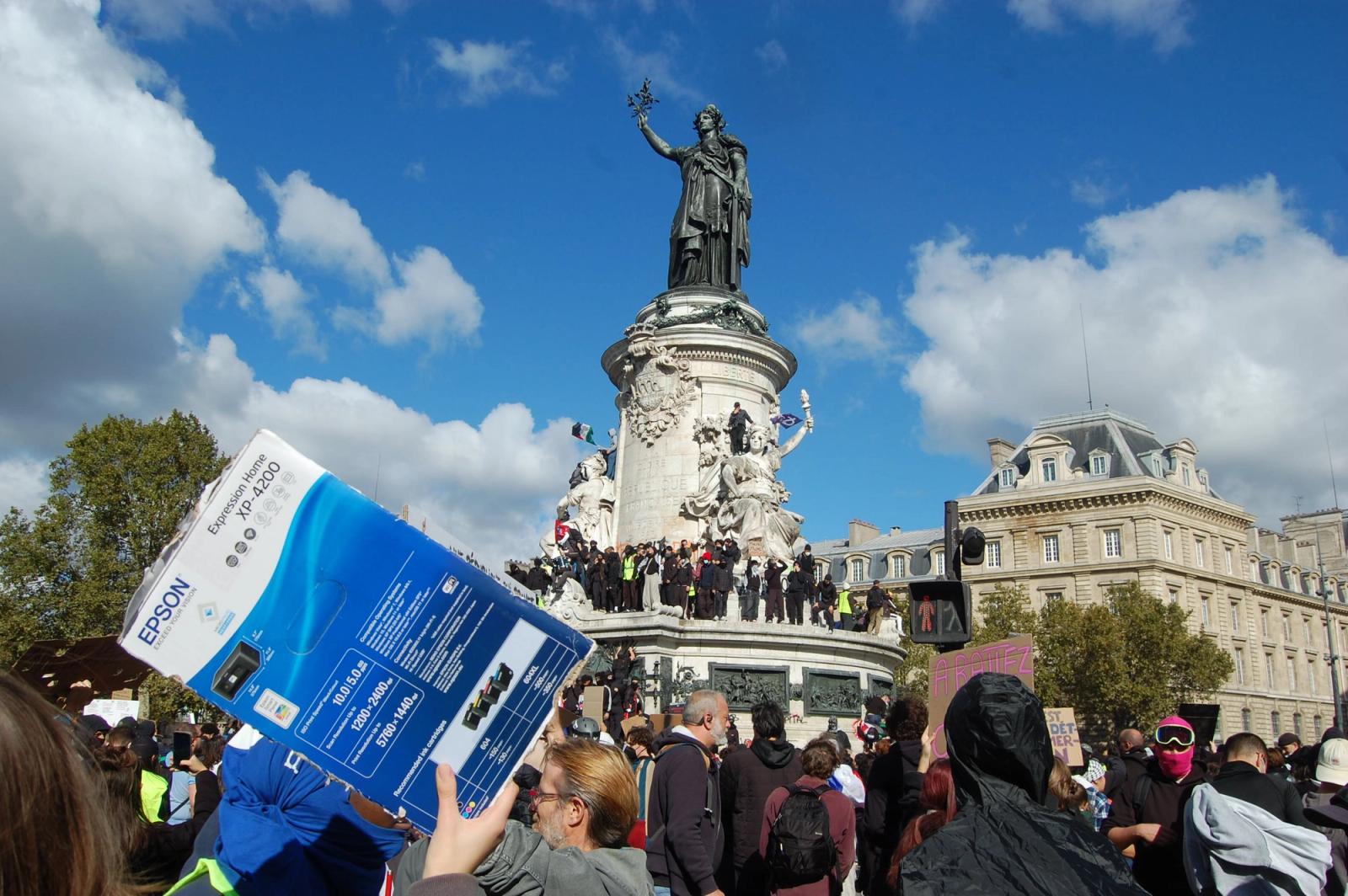
Since mid-September, France has experienced a sweeping social movement, initiated by students calling for better conditions in public high schools, according to Le Monde. Thousands of students have chosen to block access to their schools, and organize protests throughout France. The movement has been met with a police response, as riot police have been sent across the country - leading to altercations and heavy injuries.
On September 17, 2026, the students of the French high school Antoine de Saint-Exupéry in Créteil chose to block the entrance and not attend their classes in support of their teachers’ strike against the lack of personnel and funds, according to TF1 Info. The movement rapidly took off across the country, as students wanted to voice their frustrations with their school systems and call on the government to act.
But what are the origins of the students’ frustrations? According to the SNES-FSU, the largest French trade union for secondary school teachers and personnel, at least half of all schools in France lacked at least one teacher at the start of this school year. In the French capital’s school district, 53% of all schools lacked one teacher, in Toulouse’s district, 71%, and in Créteil’s district - where the movement started - 61% of all institutions are missing at least one educator. Additionally, according to the DEPP, between 2024 and 2025, 10.4% of all classes were not taught due to staff shortages. The shortage, however, extends to more than just teachers, as many schools lack other staff such as guidance counselors, school psychologists, or student supervisors.
Additionally, students all over the country have called out the state of secondary education buildings. According to a report by the French Senate, 58% of all school buildings were constructed before the 1980s, and therefore lack effective climate control - especially as France experiences increasingly strong summers. In these buildings, classes now average 30 students, two more on average than 15 years ago.
As the movement picked up momentum, more high school students began organizing their own blockades. According to Laurent Nuñez, the Minister of the Interior, October 2, 1,027 of France's 3,700 high schools were affected, with 222 of them blocked. As a preventive measure, the Minister of Education announced the closure of 400 high schools to mitigate damage, according to CIDJ. The movement soon spread to higher education. By 7 October, 80 university campuses had ongoing mobilization in support of the movement.
The movement has drawn international recognition in part due to the violence between students and police - as scenes of confrontation go viral online. The police have been using tear gas, flash grenades, and LBD40 rubber-bullet launchers as means to disperse crowds, according to Amnesty International. The high commissioner of the UN Commission on Human Rights has stated that they monitor with “concern” the “incidents” going on and the Human Rights Watch says the government is seeking to widen police use-of-force powers.
On 8 October, 24,000 students gathered at the Place de la Bastille in Paris to march, according to TF1 Info. They were met with tear gas and riot police. At least 650 police officers have suffered injuries due to clashes with protesters. In the French city of Lens, a 15-year-old student lost his hand and upper arm due to a flash grenade which had been shot by a police officer to disperse a crowd of students, according to Gabon Media Time. Such instances have fueled political debate, as the government accuses “radical left groups” of inciting violence and destruction while opposition lawmakers from the far-left party LFI denounce the government's actions as a form of repression. Police also arrested a large number of protesters, as 6,877 have been taken into custody as of 8 October 2026, of which 86% are minors, according to Franceinfo.
The blockades have also led to an intense amount of destruction and vandalism, as individuals have used protests to burn trash cans or spray paint inside and around high schools, according to Noovo Info. According to the French government, by October 10th, the destruction linked to the student movement had reached an estimated cost of 30 million euros.
The protests reached a peak on 17 October, 2026, when hundreds of thousands of individuals took to the streets, according to La Clé Publique. Students were joined by many other political groups as it turned into a national protest. According to the Interior Ministry, about 550,000 marched across 110 demonstrations, including 110,000 of them in Paris, although the CGT - one of the largest trade unions - claims the number is closer to 800,000. Protests in major squares such as the Place de la République in Paris turned into chaos as riot police attempted to disperse crowds and stop looters. By the end of the day, 1,800 individuals had been taken into custody, including 855 in Paris - although this number would later be updated to 2,397 arrests. Throughout the day, approximately 1,500 businesses were hit, looted, or vandalized. Additionally, 997 police and gendarmes were injured, including seven seriously. It is unknown how many protesters were injured.
On 18 October, as small-scale protests continued throughout the nation, Macron spoke to the nation, describing “anger and shame” and vowing to make looters pay - all while separating the legitimate demands made by non-violent protesters and the looters, according to Gulf News and Politico. The student and trade unions have pushed for a continuation of peaceful protests and a strike on November 5. The Yellow Vests have already announced an “act II” scheduled for Saturday, October 24th. The government has already begun preparing for the possible round of protests by mobilizing specialized police and security groups such as the BRI, the CRS, and the GIGN and authorizing further use of helicopter or armored vehicles, such as the “Centaure,” according to RMC. Furthermore, the government has instituted a series of curfews in major cities as well as restricted requests for protests, according to Al Jazeera.
Far-right political groups such as the Rassemblement National, or RN, have positioned themselves as the party of order, condemning the looting and violence, according to Euronews. It has been found that 90% of the individuals charged with said acts, known as “casseurs,” are over the age of 18, according to Europe1. Further, as the government blames the “ultra-left” and the LFI for instigating violence, LFI’s founder and presidential candidate Jean-Luc Mélenchon has positioned himself as a defender of students, according to La DH and L’actualité. The protests come six months before the presidential election and put pressure on candidates, including Marine Le Pen and Jean-Luc Mélenchon, to respond.