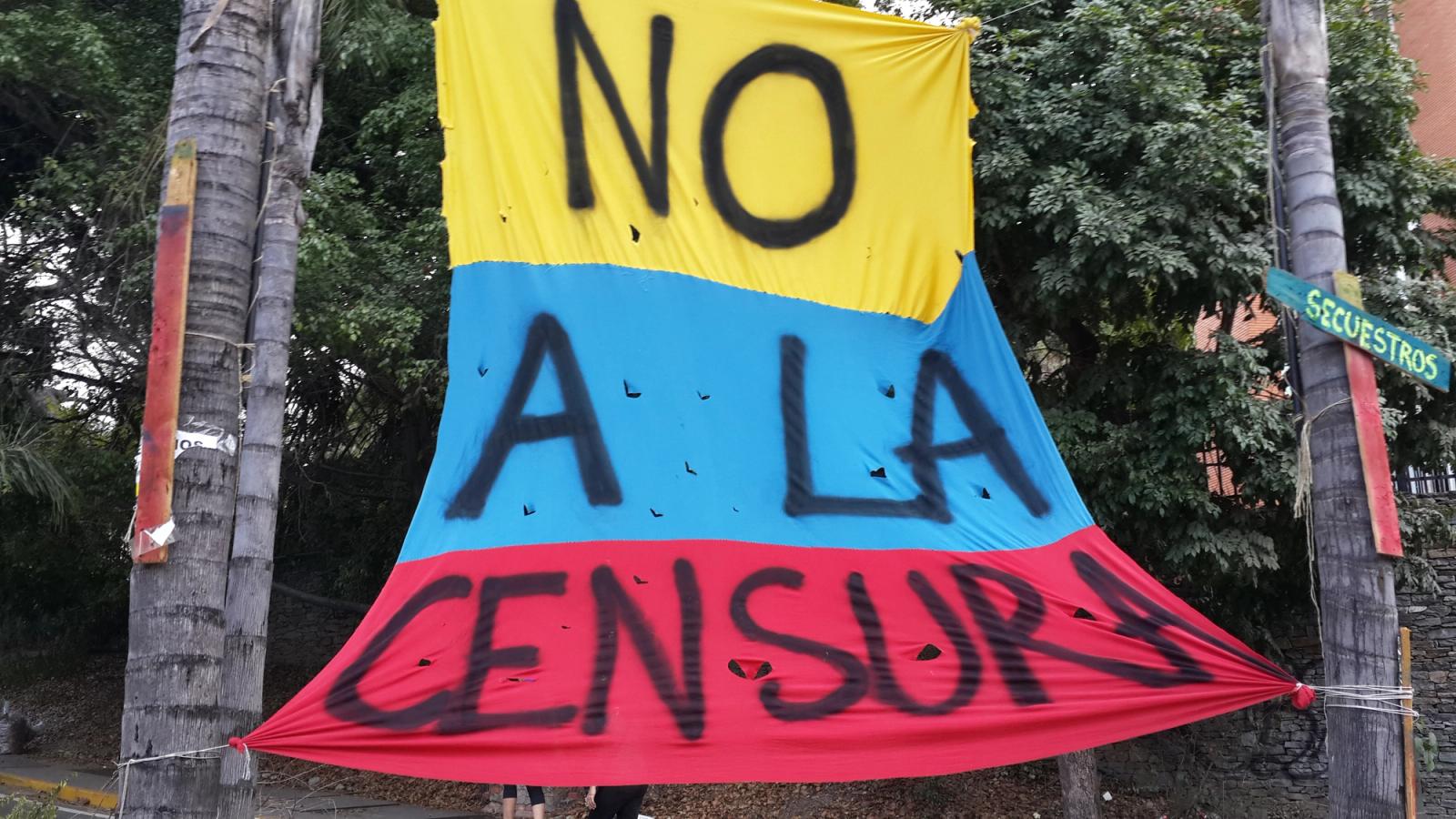
A second round of dialogue between the Venezuelan government and opposition members on September 17 produced significant gains toward ending media censorship by allowing access to previously banned websites. This included 17 news sites that were blocked for years under former president Nicolás Maduro's administration.
Dinorah Figuera, head of the opposition’s delegation in the dialogue, celebrated the decision on X, stating, “Reporting without fear cannot continue to be a privilege, but rather the fulfillment of the law…This is a first step. Many media outlets are still missing, and all of them must return, in a full and permanent manner,” according to Deutsche Welle. Indeed, the September 17 developments are only a partial victory for the opposition. As anti-censorship groups like VE Sin Filtro have monitored, currently, only 45 domains have been unblocked across all internet service providers, and 143 remain completely blocked. This includes 24 leading news sites such as Venezuela’s La Patilla and Argentina’s Infobae.
On September 29th, Interim President Delcy Rodríguez promised further progress when she instructed Congress to reform the 2017 hate-speech law Maduro put in place, which formed the legal basis for the internet blockages, according to Latin News. She says that the law, which establishes prison sentences of 10-20 years for hate speech and allows the government to revoke the licenses of broadcasters that disseminate hatred, had been “badly applied” and “used abusively.” The same week, the national assembly appointed an 11-person commission to spearhead a reform of the law. The commission includes eight members from the ruling Chavista movement and three from the opposition. The reform commission includes Maduro’s son, Nicolás Maduro Guerra, one of several lawmakers closely aligned with the former president.
César Batiz, director of the major Venezuelan news outlet El Pitazo, called on the Trump administration to pressure the interim government to move faster in making substantial changes, according to Caracas Chronicles. He notes, “As long as the repressive apparatus is still in place, while repressive laws are still in effect and that we still have journalists facing judicial processes, we cannot talk about a free press in Venezuela.”
For now, NGOs and anti-censorship groups like VE Sin Filtro and Espacio Público are keeping close watch on the remaining 143 blocked domains and publishing nearly weekly reports with accurate, verified counts of lifted restrictions. While the future of these remaining domains remains to be seen, the opposition is optimistic, given the current momentum and mobilization of local news outlets calling for more restrictions to be lifted. As Figuera summarized, “Without a free press, there’s no democracy possible or a true encounter among Venezuelans.”