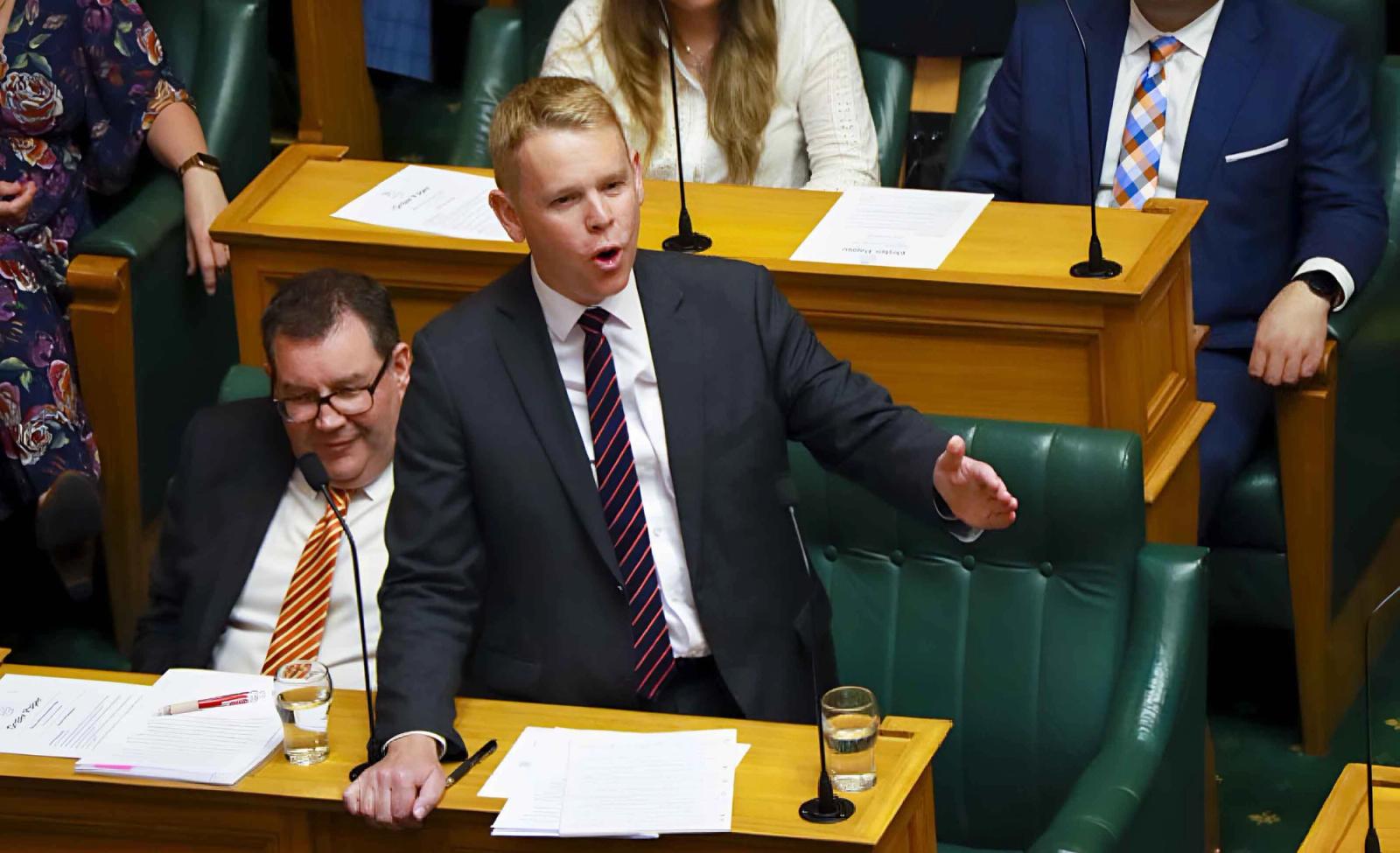
New Zealand voters will go to the polls on November 7, with polls and predictions forecasting a tight race between left and right-wing coalitions. The election to New Zealand’s House of Representatives will decide whether New Zealand will continue under the leadership of Prime Minister Christopher Luxon or return back to the leadership of the left and former Prime Minister Chris Hipkins.
Luxon, leader of the center-right National Party, is seeking re-election on a record of reducing crime, delivering tax cuts, and prioritizing school basics, according to his campaign. He pledges no new taxes and an expanded 5 percent deposit program for first-home buyers.
However, his government has been hampered by disunity. After the 2023 election, National formed New Zealand’s first three-party coalition with David Seymour’s libertarian ACT and Winston Peters’ populist New Zealand First. Policy disagreements have persisted, with Peters rejecting the government-negotiated New Zealand–India free trade agreement, as reported by The Spinoff. Divisions have also rocked the National caucus, with AP news reporting that poor polling sparked two failed leadership challenges within the party in April and August of this year.
The center-left Labour party, led by former Prime Minister Christopher Hipkins, has challenged the government, criticizing the government’s criminalization of homelessness and promising to do more on the cost of living and the economy. He has particularly focused his critiques on health issues, as reported by Radio NZ, characterizing the health system as in crisis and lambasting Luxon for denying the challenges, noting, “if you won't listen to the doctors and the nurses who are telling you the health system is in crisis, then you are never going to be able to fix it.”
Neither Luxon nor Hipkins will likely form a government by themselves due to New Zealand’s distinct Mixed Member Proportional (MMP) electoral system. As ElectionNZ explains, Kiwis get two votes: one for a local representative elected by a plurality of voters in an electorate and one for a party, with the proportion each party receives determining their seat count in the House of Representatives.
Luxon will likely seek to renew his coalition with New Zealand First and ACT, while Labour will look to the Green Party. If neither bloc secures a majority, Te Pāti Māori, which could win in the dedicated Māori seats, or the newcomer The Opportunity Party (TOP), led by former consultant Qiulae Wong, could prove decisive.
Often labeled centrist, TOP advocates a Universal Basic Income and land value tax alongside pro-growth and environmentalist policies. Wong describes it as “a young, hopeful and ambitious party. We’re standing up for better politics - where our leaders think long-term and act with integrity.” Open to working with either bloc, the party’s elected members could become kingmakers in choosing the next prime minister. However, under MMP, the party must secure 5 percent of the vote to gain proportional representation. With polling near that threshold, voters risk “wasting” their votes if the party falls short.
Kiwis will thus go to the polls weighing both the parties’ policy platforms and the makeup of the government those parties potentially form as they cast their two votes.