A heated border dispute has pushed Ethiopia and Eritrea to the verge of the first war between the two Horn of Africa neighbors in over two decades, according to The New York Times.
The Herald reports that at the center of the conflict is Ethiopia’s desire to regain maritime access to the Red Sea, which it lost when Eritrea declared independence in 1993. With over 120 million people, Ethiopia stands today as the world’s most populous landlocked nation, and its Prime Minister Abiy Ahmed has repeatedly insisted on permission to use Eritrean ports. In an address to Parliament on October 5, Al Jazeera reported that he sought to downplay Ethiopia’s military advances while asserting his country’s long-term geopolitical ambitions: “[T]he Ethiopian government never said we intended to kill anyone to get access to the Red Sea”; however, “[a]ccepting Ethiopia’s access to the Red Sea is a matter of time.”
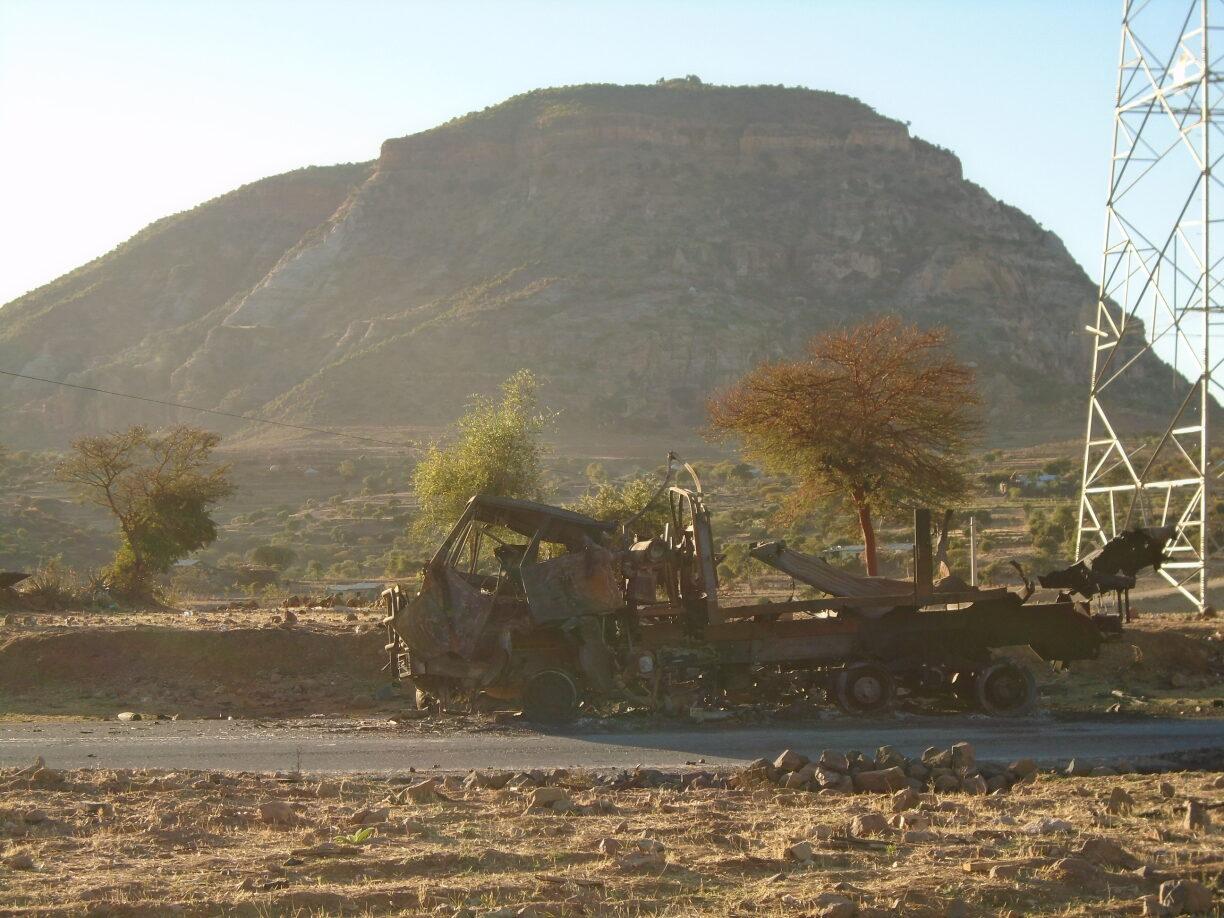
According to the Council on Foreign Relations, this escalating standoff marks a major shift from 2020 to 2022, when the Ethiopian and Eritrean militaries fought as allies against the Tigray People’s Liberation Front (TPLF), which served as Ethiopia’s ruling political party for 27 years until Abiy’s ascension and is centered in the country’s eponymous northernmost region. The two-year war resulted in an estimated 600,000 deaths and the internal displacement of over 2.7 million people. By the end of the conflict, human rights organizations alleged that both the Ethiopian and Eritrean armies had carried out major war crimes, including massacres, sexual violence, and ethnic cleansing against civilians.
Although a November 2022 peace agreement in Pretoria, South Africa, officially ended the conflict, the Tigray region has once again become a flashpoint of instability. Given that the Pretoria Accord allowed the TPLF to survive politically rather than be fully eradicated, Eritrea has backed TPLF factions and anti-government rebel coalitions to demonstrate its displeasure with Abiy’s rhetoric, per The Bangkok Post. As it borders Eritrea, Tigray risks finding itself caught in the middle of two opposing sides. According to The Economist, the Ethiopian government has already begun recommencing various offensive operations in the region. A potential new conflict risks turning the forces that once united Ethiopia and Eritrea into a means of division.
Security analysts warn that a new conflict could far exceed previous regional crises. The Global Firepower Index reports that both nations have maintained significant military power from previous conflicts: Ethiopia has an army of over 500,000 soldiers, along with effective drone capabilities and heavy armor, while Eritrea, despite its small size, has a heavily militarized society, including mandatory service, as a result of its violent acquisition of independence.
International aid agencies such as the United Nations High Commissioner for Refugees caution that a war could severely devastate the region, given that the BBC reports that over four million people in northern Ethiopia remain dependent on humanitarian assistance following years of drought, military violence, and economic collapse.
As troop movements heat up along the Ethiopian-Eritrean border, diplomats are striving to prevent the dispute from exploding into a wider regional conflict. Without immediate de-escalation, the fragile peace that has kept at bay the possibility of one of the 21st century's deadliest wars risks completely dissolving into the Horn of Africa’s sands.