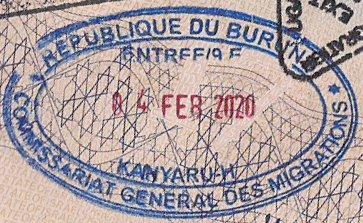
Burundi announced on September 30 that it would begin accepting migrants deported from the United States, per The Guardian. According to Third Country Deportation Watch, the country joins 12 other African nations that have made similar deals.
Breaking Burundi reports that President Evariste Ndayishimiye cited his country’s tradition of hospitality as the rationale for his decision, and emphatically denied receiving financial support in exchange for fulfilling U.S. President Donald Trump’s demands for recipients of third-country deportation. Ndayishimiye’s spokesman assured the public that Burundi would not accept those accused of crime or terrorism.
Human rights organizations have raised concerns about Trump’s third-country deportation drive. More generally, migrants may be displaced to nations where they do not speak the language and have no personal connections. In Africa in particular, some of the countries involved, including the Democratic Republic of the Congo and the Central African Republic (CAR), are currently engaged in active conflicts, making conditions for the incoming migrants severely dangerous, per the Council on Foreign Relations. Reports of violence and abuse both during transport and after arrival are widespread. During the journey to the third countries, the Los Angeles Times reports that migrants have endured long flights while being restrained and shot with pepper balls. According to The New York Times, in September, two men deported to Equatorial Guinea’s dilapidated Hotel Bamy were severely beaten in an effort to silence them and prevent the public from learning about the violence third-country deportees experience.
According to Business Insider Africa, four days before Burundi’s announcement, Côte d’Ivoire became the fourth African country to publicly reject Trump’s proposal, alongside Burkina Faso, Nigeria, and South Africa, despite significant financial incentives. As Nigeria’s former Foreign Minister stated last year, “We have enough problems of our own,” per Amplify Africa.
Kenis Adalberto López, a 44-year-old migrant from Nicaragua deported to the CAR, told the Los Angeles Times that “I’d rather die [in the US] than in Africa.” Another interviewee in the CAR said, “They sent me to a failed state.” Their fear reflects the reality of the thousands of migrants subjected to third-country deportation, a fear of being sent somewhere they have never known, with no guarantee of safety or belonging.